How to spot a liar and be your own lie detector

Today, I want to talk about how to spot a liar.

Introduction:

Liar, Liar pants on fire” as the old saying goes, but how to spot a liar in any situation? If only it were so easy to spot a liar, simply by looking at whether his or her pants were on fire!

Unfortunately, that’s not the way life works.

And handy as it might be to carry around a lie detector at all times, that wouldn’t be very practical either, would it? Well, not a lie detector of the physical variety anyway.

So what’s the next best thing?

The next best thing would be if we could become our own lie detector, surely?

However, would that be possible?

The answer is yes. With a little effort, it’s possible to develop the skills to spot a liar. You just need to think about the signs.

Make Money

Become a lie detector:

Now, this is important because we live in a world where we’re constantly bombarded with fake news, weasel words, half-truths, untruths and outright lies.

Politicians are the worst culprits but just about everyone in life tells the occasional lie when they feel it’s necessary.

That’s human nature, of course. This means we must learn the skills that will allow us to judge whether what we are being told is the truth or a lie at any given time.

How to spot a liar:

So how do you spot a liar?

Essentially it’s all about looking for clues.

Those little signs will reveal whether what we’re being told is likely to be true or not. A lie detector looks for clues and we can too.

In the TED Talk video embedded here, Pamela Meyer offers her observations on the signs or clues to watch out for to see if someone is lying to you.

I must say that I found this video both useful and interesting and it’s worth a few moments of your time.

The ability to spot lies is a powerful skill that everyone can develop.

You can become your own lie detector, and it’s worth the effort.

If you can only work on developing one skill, then lie spotting would be a good one, I think.

DishDilemma.com
Make Money

Please share this post with your friends:

Did you find this article interesting and useful, dear reader?

If so, then please share it on social media with your friends. When you share, everyone wins.

So please share it now. If you do I’ll be ever so grateful and you’ll be helping a keen blogger reach a wider audience.

Thank you.

Phil Sutton

How to make the most of your future

How to make the most of your future? A question we all ask ourselves occasionally, I’m sure.

We worry about the future because increasingly the world seems such an uncertain place. There are times when it seems completely crazy.

In many ways, the future is uncertain, but then again, it’s a lot more predictable than you might think.

I’m often asked what I think the next 10 years will be like. The answer’s simple; the next 10 years will be pretty much like the last 10 years and the years before that, I think.

DishDilemma.com
Phil Sutton

Future years:

Think about it. The next 10 years will just be a constant stream of challenges with a lot of problems to be solved.

That’s how life’s always been, surely? And that’s good news for us all. Why?

It’s good news because it’ll ensure that there’s a constant stream of opportunities for enterprising people to exploit.

So we can all make a good living, and all we have to do is focus on those problems we can solve for other people.

Yes, jobs may be in short supply, but there’ll always be plenty of customers with problems to be solved. Customers for goods and services yet to be invented.

If we can all learn to look for customers rather than jobs and make sure we have the skills and know-how to solve problems for those customers, we’ll always have work, and from that, over time, we can build wealth too.

The nature of work:

Opportunities will always be there, and we can choose to take them or not. For the fleet-footed, there will always be opportunities to make money, regardless of politics and political personalities.

Create your own future:

Find customers you can serve, serve them well, and you’ll always do well.

And it doesn’t matter whether you were successful or otherwise at school either. That’s irrelevant. There are plenty of successful and wealthy people who failed to shine at school.

Skills can be learned and knowledge can be gained at any time in your life.

So look around for people you can help, improve your knowledge and skills as you go along, and gradually enhance your earning ability. It can be done; people do, and you can too.

Make Money

Today’s assignment:

So let me finish with an assignment for you.

Look around for a problem to be solved. Look carefully, and you’ll find plenty of them, I promise you.

Now, who’s the potential customer? What skills will you need if you are to solve that problem for the customer? And once you’ve identified those skills, how will you get them, and by when?

Now think about this assignment carefully.

By applying your unique talents and know-how, whose problems could you solve? To whom could you be an answer to their prayers?

This is how business people think.

How to make the most of your future:

The future’s as bright as you want to make it for yourself. It’s all down to you.

Don’t just let life happen to you.

Start right now and make it happen.

Create a future that’s right for you. Decide where you’re going, set some goals, and start taking action.

Don’t just accept whatever life throws at you; go out and get all the things you want.

Other people do, and so can you. Go on, get started, now!

Make Money

Please share this post with your friends:

Did you find this article interesting and useful, dear reader?

If so, then please share it on social media with your friends. When you share, everyone wins.

So please share it now. If you do, I’ll be forever grateful, and you’ll be helping a keen blogger reach a wider audience.

Thank you.

Phil Sutton

Other articles that might appeal to you:

9 tips for getting the most from your work

If you’re wondering about getting the most from your work, this post is for you.

So, do you feel valued by your employer, dear reader? Now think about that question for a second or two.

I’m sure you’re aware that companies are very good at circulating messages that include platitudes such as, “Our employees are our most important asset,” or  “We value our employees.”  I’m sure you’ll be familiar with such pronouncements.

However, you must ask yourself whether they mean it, surely?

Well, few do, if any, in my experience.

Make Money

Now let’s be fair:

To be fair, many employers think they mean it when such messages are circulated to the workforce.

Staff in the human resources department are probably well-intentioned when they issue such statements.

Nevertheless, the reality for the employee is almost always quite different, however right on and trendy an employer tries to be.

Rarely are employees valued by their employer. Usually they’re seen as replaceable or can be dispensed with as needs dictate.

What does it mean for you?

Most companies regard people as a commodity to be used when they’re useful and then discarded when they’re perceived to be no longer of use.

Not a comfortable thought, possibly, but true nevertheless.

So, what does this all mean for you?

Well, for a start, it means that you have to look after your own interests.

If you don’t look after your own interests, then I can assure you that no one else will.

If you think someone, somewhere, is thinking about your best interests, then, with the exception of your parents, that’s very unlikely at best.

It’s all down to you to get the most from your job, your career, and your life.

It’s your responsibility:

You must decide what you want; you must decide where and how you can add the greatest value; you must decide what’s the next logical move for you, in pursuit of your goals; and you must decide on the timing of when it’s appropriate to move on to the next challenge.

Occasionally, you might get lucky and a great opportunity will fall straight into your lap. However, that doesn’t happen often, if at all.

Remember that you are the captain of your own ship.

So you decide where it goes, and you must steer it accordingly.

It would be a mistake to rely on others to plan your career, quite simply because they won’t, and it would be naïve to think otherwise.

So, here are 9 tips for getting the most from work:

Getting the most from your work:

1. Take a pragmatic view:

Now, reading this, you might think that I have a jaundiced view of companies and corporate life.

I don’t. This is simply a realistic and pragmatic view based on many years of experience.

I understand why companies do what they do from a commercial standpoint

Work is just doing stuff for other people in return for money.

If a company has stuff that needs doing, they are willing to pay good money to get it done.

However, once that work’s been done, or is no longer required, employers see no reason to retain people. Why would they? After all, they’re in business to make money.

So be realistic and take a pragmatic view. That way you won’t be disappointed.

2. Recognise the psychological contract:

Once again, we must be fair. The company’s approach is no different from the one we would take as individuals.

If we need our house painting, we hire a painter and decorator. Our house gets painted, and when the job’s been done, we pay the painter for the work completed.

We don’t start worrying about the painter’s job satisfaction or career development. The psychological contract between us and the painter ends when the bill has been settled for the work completed. That’s the way it is. It’s that simple.

So why should we expect our employers to be any different?

Companies are not charities or job creation schemes. Commercial companies have to make a profit if they’re to grow and survive, and costs have an impact on profit, obviously.

The psychological contract we have with our employer is one where we do stuff for them and then we’re paid for our efforts at the end of each month.

We’re the hired help, and once we’ve been paid that’s where the psychological contract ends as far as our employer is concerned.

Your employer will not spend time worrying about your aspirations or your dreams. Once again, it would be naïve to think otherwise.

3. Accept commercial reality:

Commercial reality, whether we like it or not, is that all companies exist to make money for their owners. It’s that simple. Why would anyone start a company for any other reason?

So if you think that your loyalty will be appreciated by the average employer, I think you’re either mistaken or deluded.

Individual managers might value your presence in the team, of course, but the people at the top of the organisation have to be much tougher and businesslike in their approach, as they’re ultimately accountable for the performance of the business.

Employers will take everything you give and a bit more besides, but once you’re no longer required, they will be as ruthless as they have to be. If it’s their survival versus your career aspirations, there’s only one outcome, and it will have nothing to do with your aspirations.

If they weren’t able to be ruthless when necessary, then that could put the whole company and the jobs of everyone involved at risk. So there’s a good business reason for the way companies tend to operate.

Furthermore, ordinary people don’t spend their money unnecessarily, so why should we expect a company to be any different?

Occasionally, you’ll meet leaders of real stature and class who will treat you very well. However, they’re the exception rather than the rule.

Most senior executives are driven only by self-interest, in my experience. Once you’re no longer of use, they will be as ruthless as they have to be. That’s how the world works, so don’t expect it to be any different for you.

4. Don’t expect loyalty to be reciprocated:

The point I’m making here is that you must be ruthless too. You must look after your own interests, constantly.

It’s perfectly reasonable for you to be working with your own agenda in mind. Deliver the results for which you’re being paid, of course, but always with one eye on your own best interests.

In any job you should make sure that you know what you’re meant to be doing and what you’re meant to be delivering too.

What you’re delivering must add value. You should know what that value is, and you should be confident that it’s not something that can be done by a machine. If it is, then the chances are that one day it will be and you will be out of a job.

Never do anything out of a misplaced sense of loyalty because that loyalty is unlikely to be reciprocated. At work, you have to be very businesslike in everything you do.

For you, the name of the game is earning a living. If it’s not obvious to you what your contribution is meant to be, you should start to worry. And if you cannot explain what you’re meant to be doing in a couple of lines, then it’s time to move on.

If you don’t know what you’re meant to be doing, chances are that your boss is wondering too. And once your boss starts to question your role, there is a risk that it won’t be too long before your job is eliminated in a future cost-saving exercise.

5. Look after your own interests:

Remember this:

Life is what you make it.

As I said earlier, you’re the captain of your own ship.

You should be steering that ship in a direction that suits you and your ambitions. Steer the good ship ‘Me’ in the direction you wish to go and not in the direction someone else wants you to go.

You should be following your agenda, and within the framework of your plans.

If you think your employer has plans for you, you’re fooling yourself.

You will only figure in your employer’s plans for as long as it makes good business sense for them to include you in those plans.

If they can’t see how you’ll add value to their plans, then a parting of the ways might not be far away.

6. Take every opportunity to gain experience:

You may make mistakes occasionally, and you may do things for employers that, for whatever reason, come back to bite you. If you do, don’t worry. Just learn any lessons from the experience and move on.

Lessons learned are far more valuable to you than anything someone else can tell you. The commodity, based on life’s lessons, is known as experience, and experience gained is a valuable commodity.

Take every opportunity to broaden your experience and grow.

Take on every challenge that comes your way. However daunting a challenge might seem, it will be a learning opportunity through which you’ll grow. View such opportunities positively and don’t be afraid to put yourself forward. You can do it and you’ll be a better person for it.

The message here:

Work harder on yourself than you do on your job

The more experience and know-how you have to offer, the more employable you’ll be and the greater will be your financial rewards.

7. Have realistic expectations:

Never expect loyalty from your employer, and you won’t be disappointed.

You’re not indispensable, and neither is anyone else. If you were to die tomorrow, you’d be replaced in a heartbeat, and the company would get along fine without you.

If you weren’t around, someone else would be hired quickly, and the business would move on. And in all probability, you’ll soon be forgotten.

The chances are that someone else will take the credit for any significant contribution you’ve made, but you’ll probably take the blame for everything wrong, including things in which you had no involvement at all.

That’s life, unfortunately.

8. Work to your own agenda:

If you make sure you look after your own interests, then your achievements will be all yours and you’ll be on the road to success.

You have to carve out the success you want; no one else will do it for you.

Add real value to your employer for as long as you can or for as long as it makes sense within your own plans for you to do so, and then it’s time to move on to the next challenge.

Don’t get overly sentimental; you’ve got to be as ruthless with your employer as they would be with you. It’s perfectly reasonable to work to your own agenda, and that’s exactly what successful people do.

9. Keep reading; keep learning:

Never underestimate the value of reading and continual learning.

The more you read, the more you’ll learn, and the more you learn the greater will be your value.

Read one good book related to your work or personal development each week, and over a yea,r that’s the equivalent of a PhD‘s worth of knowledge gained.

Increase your knowledge by that amount every year, and you’ll be light years ahead of your colleagues.

Increase your knowledge and skills, and you’ll increase your ability to add value. Add more value and you’ll earn more. And what’s not to like about that?

So, make sure you allocate at least 30 minutes per day for your reading, and more time if possible.

Conclusion:

Appreciate the opportunity an employer gives you. Be grateful you have a job and an income.

However, never be overly sentimental, nor show misplaced loyalty to an employer. An employer must be businesslike and so must you.

Add value where you can, but look after your own interests, and when it makes sense to do so, move on.

Sensible people will always look after their own interests. It’s perfectly reasonable to have an agenda of your own.

Getting the most from your work is all about adding value, gaining experience, broadening your skills, and moving on to the next challenge when it’s appropriate to do so. Above all, enjoy what you do. Life’s too short to be spending a third of it doing something that doesn’t leave you fulfilled.

DishDilemma.com

Please share this post on social media:

If you found this article useful, then please share it on social media with your friends.

When you share, everyone wins.

Please share it now, and I’ll be ever so grateful. You’ll be helping a keen blogger reach a wider audience.

Thank you for your support, dear reader.

Phil Sutton

Articles that might also appeal to you:

13 tips for improving your personal happiness

You’ll be as happy as you choose to be. You might not think so, but that is a fact.

Yes, life can be challenging. Yes, life can be full of frustrations and disappointments. And yes, other people can drive you nuts at times.

No one’s life is perfect, and everyone has problems. They’re facts too.

However, your level of personal happiness will be dictated by how you choose to look at life.

You can let life’s challenges make you feel miserable, or you can refuse to let anything get you down.

Just say to yourself, “I’m going to be happy, and nothing is going to stop me.

You’ll find that being happy isn’t as hard as it appears to be at times.

Here are 13 ways that will help you increase your sense of personal happiness and improve your life too:-

Make Money

Tips for improving your personal happiness

1. Talk to yourself positively:

One of the greatest contributors to unhappiness is what’s going on in our heads.

Everyone is prone to self-doubt and feelings of not being quite good enough.

Everyone worries about being found out in their job.

It’s easy to assume that in some way you’re not very good at what you do and you think eventually someone will notice. Have you had that experience dear reader?

We all struggle to appreciate that we’re actually better than we think we are and that if we really couldn’t do the work for which we are paid, someone would have noticed already and they would have said something.

Negative self-talk can grind you down. So, stop it now.

Replace negative self-talk with positive self-talk.

Tell yourself constantly that you’re better than you think you are and that you have every reason to like yourself.

And adopt this saying as your mantra:

Repeat it to yourself frequently and whenever even the slightest hint of doubt pops into your mind.

2. Value people:

Your social network, i.e. the people with whom you interact, and your relationships are essential to your happiness.

Human beings are social animals. We’re not solitary creatures like cats. We need other people, frustrating as some of them can be at times.

Remember we’re all different. We’re all individuals. So accept people for who they are and what they are. Everyone has many sides to their personalities. No one is perfect.

So look for the good in people and don’t judge their less flattering sides too harshly. Never forget, we all have a less flattering side.

However, keep away from personality clashes and arguments. Let go of any resentment you may feel towards individuals. Just remember they’re not perfect, just like you.

If an argument seems inevitable, seek first to understand and then to be understood.

By understanding the other person’s point of view and why they feel the way they feel, you just might find you get along with them so much better.

And even if after you’ve listened carefully, if you still think they’re wrong, so what?

You can always agree to disagree.

You don’t have to prove you’re right and they’re wrong.

It doesn’t have to be about you proving you’re right all the time.

Peace and harmony are of much greater value to your happiness than being proved right.

So just let it go. 

3. Be grateful:

Being grateful for whatever you have, is an important part of your happiness.

Being thankful is a great attitude to develop.

If you think about it, I’m sure there will be at least as few things for which you can be truly thankful. Simple things like having a laugh with a friend whilst having a coffee or a meal.

They don’t have to be big things.

Little things that put a smile on your face are far more important to your personal happiness than any amount of material possessions.

In fact, material possessions don’t make you happy at all. Mostly the resulting clutter they create is just a source of stress and extra work.

Take the time to thank those people who provide you with even the smallest things. Making a point of saying thank you will help you realize just how abundant your life is in reality. 

4. Avoid doom and gloom:

The media tends to focus on bad news.

Unfortunately, bad news attracts more attention than good news and media channels are focused on ratings. They make money from eyeballs watching and ears listening.

They’re in the business of making money not cheering you up, so they’ll focus on bad news always.

It is a fact that most news is depressing and stressful.

With 24-hour rolling news channels, our lives are filled with a lot of stuff that can fill us with doom and gloom, if we’re not careful.

Watching, listening to, or reading the news will detract from your personal happiness.

So, if the news is just a source of doom and gloom then it’s a good idea to get less of it, don’t you think?

Switch it off and find something else to do that will cheer you up.

5. Manage your time wisely:

Your time is precious and it should be used and managed wisely.

Just because someone expects a piece of your time doesn’t mean they’re entitled to it.

Only you can judge whether they’re worthy of your time. And it’s perfectly reasonable to say “No!” if you think that’s appropriate.

No one has an unlimited amount of time. We all have just 168 hours per week. So we all must make the most of our time because time is far too important to waste.

If someone requests a piece of your time then make sure they have a very good reason to justify it. Otherwise, just say No politely but very firmly.

It’s your life, so live it your way. 

6. Find something to make you laugh:

Let’s face it, life is far too short to be serious all the time.

Occasionally we need to laugh to alleviate our stress levels.

Laughter is the best medicine, or so they say. And I think it’s true. A good laugh can cheer you up.

So make sure you enjoy a good laugh at least once a day. It may be watching a sitcom you love or a funny animal video on YouTube. Whatever puts a smile on your face then that’s fine. You need to smile because it will help you relax.

It may be a funny joke that makes you laugh.

And if that happens, remember to share the joke with family and friends. That way you get to laugh twice. Once when you hear the joke and again when you share it.

Laugh and laugh vigorously every single day. 

7. Say how you feel:

If people matter to you then be sure to let them know occasionally.

Don’t be afraid to communicate your feelings, affections, friendship and passion to people around you.

Being open about your feelings is not a sign of weakness, it’s a sign of strength.

It’s a sign that you’re confident enough in yourself to let people know what they mean to you.

It’s a sign that you recognize how important it is for people to know that they matter to you. They’ll appreciate it and that will enhance the bond between you. 

8. Avoid negative emotions:

Pent-up feelings of anger and frustration are bad for your health.

Yes, we all feel angry occasionally but suppressing it is counter-productive.

If you’re not happy about something it’s better to say so.

Occasionally you may need to say so forcefully too. However, never say it in a way that’s mean and hurtful. That’s just being unpleasant.

And if you do say something which you later recognize as mean and hurtful then apologize. Never be afraid, or too proud, to apologize.

You won’t be the first person to say something you later regret but don’t compound the offence but failing to offer a sincere apology.

At the very least that will show you’re big enough to recognize when you’re in the wrong.

If you can learn to express your anger and frustration in a way that will not cause injury or hurt to anyone then you’ll be on the road to being a very decent human being. 

DishDilemma.com

9. Have a sense of purpose:

It’s important to have a sense of purpose.

To work each day at something in which you excel and which gets you out of bed in the morning.

Working hard at something you love can bring you great personal contentment.

Your work is your contribution to society and potentially the legacy you leave behind.

For instance, John Lennon left a wonderful collection of songs that we still listen to today almost 40 years after his death. That’s a fantastic legacy.

Work gives you a sense that you can finish tasks.

Work is a source of satisfaction when you take on a challenge and use your skills and know-how to complete it. In this way, you grow in character.

Through your work, you use your time profitably and when the working day is done you feel you’ve earned your rest and recreation.

Work well done, with a sense of purpose, will make you feel good about yourself. 

10. Never stop learning:

Learning does not finish when you leave school or college. Learning is a lifelong process. And it does not necessarily involve formal tuition.

You can be self-taught and learn by doing.

You can read books and watch instructional DVDs or video tutorials on YouTube.

You can listen to audiobooks and podcasts in your car or whilst travelling on public transport.

So be a committed student and work constantly on being a master of your craft.

Working constantly on achieving mastery will increase the value you can offer in the workplace and it will make you a very attractive proposition in the job market.

Learning is a joyful exercise, particularly if it’s a subject you love.

The more you learn, the greater will be the number of skills you can offer. The more skills you have the more value you add. So, learn something new every day.

And remember; learning will also broaden your horizons. Learning is a positive experience, so never stop learning. 

11. The power of faith:

Faith can be a great comfort in times of trial. Believing there is some higher power helps us to appreciate our place within the universe. We are nothing more than specs of dust in a great cosmic cloud, or at least that’s the way it seems.

Faith adds discipline to your life. Whichever faith you choose is not important. Well, I don’t think so anyway. However being part of a spiritual group with its singing, sacraments, chanting, prayers and meditations encourages inner peace and personal well-being.

It also encourages the idea of service and putting others first.

Never underestimate the power of faith. 

12. Minimise your exposure to pollution:

Pollution comes in many forms but it all takes its toll on your happiness and well-being.

Life is full of toxins, hazardous places, loud noises, light pollution and much more.

Minimize your exposure to these negative elements because they’re an assault on your senses and they’re not good for you if you’re over-exposed to them. 

13. Take regular exercise:

A sedentary lifestyle is not healthy for anyone.

Our bodies were built for movement. So exercise daily.

That doesn’t mean you must go to the gym. Neither does it mean you must participate in formal sports teams or clubs.

You can exercise in simple ways like running, jogging, a brisk walk or even an informal game of football or tennis with friends in the local park.

Even if you’re just taking your dog for a walk then that’s exercise too.

Alternatively, perhaps you could walk to and from work, if possible, rather than using your car or public transport.

Just do what your body was made for and you will feel a bit more alive. Regular exercise improves your health and well-being.

Conclusion:

Today’s underlying message is that you can choose to be happy or not. It all depends on how you choose to look at life and the slings and arrows that life sends your way.

There’s nothing to be gained by being miserable and a sense of personal happiness is better for your health and well-being.

So choose to be happy and develop habits that will lead you to a state of personal happiness.

It’s not easy of course, and it does take some work but it’s well worth the effort.

Phil Sutton

Please share this post with your friends:

If you found this blog post interesting and useful then please share it on social media with your friends. When you share, everyone wins.

Please share it now and I’ll be ever so grateful. You’ll be helping a keen blogger reach a wider audience.

Thank you for your support.

Other articles you might also find interesting:

4 cornerstones for how to speak so people will listen

How to speak so people will listen is a common challenge many of us face daily.

There’s an old saying that states that it’s not just what you say but the way that you say it.

And it’s very true: how something is said is as important as the words being spoken.

Now just think about that for a second. We can use the same words in different ways and deliver completely different messages.

How something is said also has an impact on whether people listen to us or not. We’ve all met engaging people who capture our attention, and we’ve all met a few boring people too, I’m sure.

In the video included here, Julian Treasure offers some excellent insight into how to speak so people will listen to you.

His underlying message in the video is that we must learn to speak with power to get our messages across to other people.

Julian Treasure suggests that there are several habits we must avoid if we are to speak with power.

He says in his view there are Seven Deadly Sins of Speaking, albeit he does note that this is not intended to be an exhaustive list. His deadly seven are as follows:

  1. Gossip: Speaking in an unkind way about other people.
  2. Judging: People are unlikely to listen if they feel they’re being judged.
  3. Negativity: It’s hard to listen to people with a negative attitude.
  4. Complaining: It’s hard to listen to a moaner too.
  5. Excuses: You won’t be taken seriously if blame is always elsewhere.
  6. Exaggeration: This can border on lying, and who listens to a liar?
  7. Dogmatism: Where facts are confused with opinions.

So, can we change if we suffer from all or some of these deadly sins?

Yes, of course, but it does take a little work and a better understanding of how improvements can be achieved.

Make Money
Phil Sutton

How to speak so people will listen:

In the video, Julian explains four cornerstones of powerful speech. He uses the mnemonic HAIL to explain these as follows:-

  1. Honesty: Being clear and straight
  2. Authenticity: Being real and being yourself
  3. Integrity: Being true to your word
  4. Love: Wishing people well. And we all like to be appreciated, surely?

However, understanding these cornerstones is only the beginning of the process because, as stated earlier, how you say what you’ve got to say is important too.

Julian then discusses aspects of speaking such as register, timbre, prosody, pace, pitch, volume, and the use of silence. To address many of these issues, you may need the help of a voice coach, of course, but knowing about them is a good start.

Julian also suggests some simple voice warm-up exercises for you to use before you give a speech. They’re so easy you can use them immediately.

This being a TEDTalk you’d expect this video to be both interesting and useful, and it doesn’t disappoint. I found Julian Treasure’s ideas fascinating, and if you’re someone who regularly speaks in front of an audience, large or small, then I am confident that you’ll find this video helpful.

This video has had over 22 million views on YouTube, so clearly, Julian Treasure’s ideas have resonated with a significant audience already.

Make Money

Please share this blog post:

If you found this blog post and the embedded video useful, then please share it on social media with your friends. When you share, everyone wins.

So go on, please share this blog post now, and I’ll be forever grateful. And you’ll be helping a keen blogger reach a wider audience.

Your support is appreciated, dear reader. Thank you.

Other articles you might also find interesting:

Here’s a truly brilliant don’t quit poem to inspire you

If you’re looking for a ‘don’t quit poem’ to inspire you, I have a brilliant one for you.

Many people aspire to success, but it can be hard to keep going.

You want success, but do you want it badly enough to pay the price?

Yes, of course. There’s always a price to be paid.

More importantly, the price must always be paid first.

That price is not necessarily paid in money. Usually, the price is paid in blood, sweat, and tears.

Make Money

How often do people quit when they would have achieved their goal with a little more effort or a few more steps?

I have no scientific data to support my conclusion, but I suspect it happens frequently. Wouldn’t you agree?

Certainly from anecdotal evidence I have, from talking to people I know, this is the case.

People start on a project or goal with enthusiasm. They think it’s all going to be easy. Then it proved to be a bit harder than they imagined, so they quit. Is that an experience to which you can relate, dear reader?

We must all accept that nothing worth having is ever easy to gain. As I said, there’s a price to be paid.

Nevertheless, people do succeed all the time. So if other people can succeed, why not you?

To inspire you when the challenge gets hard, here’s a memorable and thought-provoking poem by the late Robert Service, the so-called ‘Bard of the Yukon’. It’s called The Quitter and it’s reprinted here to inspire you today.

Don’t Quit Poem


Please share this post with your friends:

If you found this ‘don’t quit poem’ interesting, then please share it on social media with your friends.

When you share, everyone wins.

So go on, please share this post now.

If you do that for me, I’ll be ever so grateful, and you’ll be helping a keen blogger reach a wider audience.

Thank you for your support.

Phil Sutton

Articles that might also appeal to you:

5 Habits for personal transformation – be more than you are; achieve more than you think

If you’re wondering about habits for personal transformation, this article is for you, dear reader.

Today, I offer five fundamental habits to help you shift the direction of your life in a single week.

I’m not talking about revolutionary change.

Rather than seeking dramatic, overnight success, the focus here is on small, consistent actions that will create long-term change for you.

5 Habits for personal transformation
Make Money
  • The Problem: Most people “fall into” their day by reacting to phone notifications and emails immediately upon waking.
  • The Habit: Dedicate 10 quiet minutes each morning to planning.
  • Key Questions: Ask yourself what would make the day meaningful, identify the three most important tasks, and determine what would make you feel proud by bedtime.
  • The Habit: Read 10 pages of meaningful, insightful, or inspiring content every day.
  • The Compound Effect: While 10 pages seems small, it totals over 3,000 pages, or several books, per year.
  • The Result: Consistently high-quality “input” leads to more intentional thinking and better decision-making.
  • The Habit: Engage in simple, consistent movement, such as a 20 – 30 minute walk daily.
  • The Purpose: It is less about peak fitness and more about self-respect and mental clarity.
  • The Result: Discipline in physical movement builds confidence that carries over into work and relationships.
  • The Habit: Keep a journal. Keep a simple record of your experiences, focusing on what you learned and what could be improved.
  • The Value: Writing forces you to slow down and process events, turning raw experience into wisdom.
  • The Result: It makes your progress visible and helps you identify recurring patterns in your life.
  • The Habit: Before getting out of bed or checking your phone, identify three specific things you are grateful for.
  • The Psychology: Gratitude shifts your focus from what is missing to what is present. It is impossible to feel truly grateful and miserable at the same time.

If things are to change, you must change. Without change, nothing changes.

You are the captain of your own ship. If you adjust your course by, say, one degree, it may seem unnoticeable, but it will lead you to a completely different destination.

Apply these habits consistently for seven days, and you will start to change direction in a meaningful way.

Continue down this path, and the results you want will eventually follow.

Your life can improve. Other people turn their lives around, and so can you, dear reader.

Believe you can and you will. Good luck!

If you found this article useful, please share it with your friends on social media.

When you share, everyone wins.

So go on, please share it now.

You’ll be helping a keen blogger reach a wider audience, and that will be truly appreciated.

Thank you for your support, dear reader.

Phil Sutton

27 Quotes by Steve Jobs to fire your imagination

If you’re looking for quotes by Steve Jobs, dear reader, I’ve got some excellent ones here for you today.

Steve Jobs was an American entrepreneur best known as the driving force behind Apple Inc.’s success. Together with Steve Wozniak, he was a pioneer of the microcomputer revolution of the 1970s and 1980s.

Famously, he dropped out of college and proved, if proof were needed, that you don’t necessarily need qualifications or a college degree to make an impact and leave a genuine legacy to the world.

What you need is passion and a desire to do something well and to do it better than everyone else. And Steve Jobs had that in spades.

Sadly, Steve Jobs died, far too early, at age 56 on October 5, 2011. His death was due to respiratory arrest related to the pancreatic neuroendocrine tumour for which he was being treated at the time.

However, his influence on business and technology was enormous, and his ideas resonate with people to this day.

In my opinion, he was one of life’s great thinkers, and I think his views on life and work are worth reflecting on.

So here are 27 quotes by Steve Jobs that I think are worth a few minutes of your time.

Read them; reflect on them. And then consider your life and where you’re going. Are you living your life with passion, or are you just going through the motions?

As Steve Jobs implied, our time is precious. We must live our own lives in our way. And we cannot be defined by how other people think we should be. We must be ourselves.

Phil Sutton

Quotes by Steve Jobs in Video


Quotes by Steve Jobs (1-10)


Make Money

Quotes by Steve Jobs (11-20)


Make Money

Quotes by Steve Jobs (21-23)


Quotes by Steve Jobs (24-27)


Make Money

Please share this post with your friends:


If you enjoyed these quotes by Steve Jobs, then please share this post with your friends on social media. When you share, everyone wins.

So go on, please share this post now, and I’ll be ever so grateful. You’ll be helping a keen blogger reach a wider audience.

Thank you.

Phil Sutton

Articles you might enjoy:

12 Rules for success and how to achieve it

If rules for success are what you seek, dear reader, this article is for you.

Let’s be real for a second: we all want that “next level” life. Don’t we?

We want the freedom, the confidence, and the feeling of waking up knowing we’re absolutely crushing it.

But if you look around, there is a massive gap between the people who talk about success and the people who live it.

Success isn’t a lottery win.

It’s not a lightning bolt that hits you while you’re sitting on the couch scrolling through someone else’s highlight reel.

It’s a craft.

It’s something you build, brick by brick, with your own two hands.

If you’re tired of spinning your wheels and you’re ready to move the needle, these 12 rules are your roadmap.

They’re not easy, of course. However, they are the honest truth about what it takes to win and succeed.
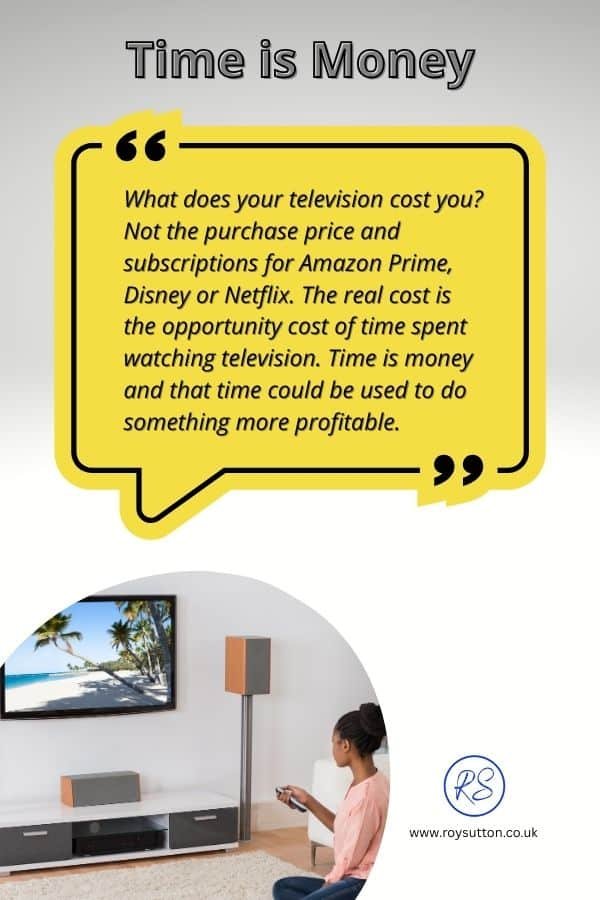
Let’s dive in.

Make Money

There is no “secret sauce.”

There is no “one weird trick.”

At the end of the day, success is a direct result of the hours you put in when nobody is watching.

We live in a world obsessed with “hacks,” but you cannot hack your way to mastery.

The universe doesn’t hand out participation trophies.

If you want the result, you must fall in love with the process.

That means showing up when you’re tired, staying late when you’d rather be out, and doing the boring, repetitive tasks that lead to greatness.

It won’t happen by accident; it happens by design, hard work, and sweat.

You climb the stairs to success one step at a time.

Procrastination is the thief of dreams. Simple!

It’s that little voice that whispers, “I’ll start Monday,” or “I just need to do more research first.”

It feels like safety, but it’s a trap.

While you’re “preparing” to start, someone else is out there actually doing it, and they’re learning twice as fast because they’re making real-world mistakes.

The best time to start was yesterday.

However, the good news is that the second-best time is right now.

Don’t wait for the “perfect moment,” because there isn’t one. The sooner you start, the sooner you’ll get to where you’d like to be.

Momentum is a superpower, but you can’t build momentum if you’re standing still.

So, get going now!

This sounds harsh, but it’s incredibly liberating.

When you stop waiting for a mentor to find you, a boss to promote you, or a friend to “hook you up,” you take your power back.

Nobody is coming to save you.

Nobody cares about your success as much as you do.

When you accept full responsibility for your life, you stop being a victim of circumstance and start being the architect of your future.

If it’s meant to be, it’s up to you.

Rely on your own grit, your own intellect, and your own will to win.

You can read every self-help book and attend every seminar, but if you don’t apply that knowledge, it’s just entertainment.

Success is not a philosophical debate; it’s a series of practical actions.

Be a practitioner, not a theorist.

Try things. Fail at things. Pivot. Adjust.

The world doesn’t pay you for what you know; it pays you for what you do with what you know.

Keep your feet on the ground and your eyes on the tangible results.

If what you’re doing isn’t working in the real world, change your approach.

Time is the only resource you can’t buy more of.

Billionaires and beginners both get the same 24 hours each day. The difference is how they use them.

If you’re spending four hours a day on “low-value” activities—mindless scrolling, arguing with strangers online, or over-analysing things that don’t matter—you are literally throwing your future away.

Protect your time like it’s gold.

Focus on the 20% of activities that drive 80% of your results.

Be ruthless with your schedule.

Remember, it’s your time!

When you respect your time, the world starts respecting it, too.

We’ve been sold a lie that life is supposed to be easy and comfortable all the time.

Well, I’m here to tell you, it’s not.

Life is messy, unfair, and exhausting. And that’s fine. It’s just the way it is.

Once you stop expecting things to be easy, you stop being frustrated when they’re hard.

Strength and character aren’t developed in easy times; they’re forged in the struggle.

When you hit a wall, don’t complain about the wall.

Figure out how to climb over it, break it down, or tunnel under it.

Accept the challenge and just get on with it.

Phil Sutton

If you only remember one thing from reading this article, remember: you must avoid idiots.

You are the average of the five people you spend the most time with.

If your inner circle consists of people who complain, lack ambition, or bring constant drama into your life, you will eventually become just like them.

So, surround yourself with the type of people you want to be.

Find the people who challenge you, who are smarter than you, and who push you to be better.

Your environment dictates your “normal.”

If your “normal” is excellence, you’ll achieve excellence.

If your “normal” is mediocrity, you’re in trouble.

It matters who you mix with if you want your life to improve.

The economy, the weather, what people think of you, or what happened five years ago—none of this is within your control.

Spending your mental energy worrying about these things is like trying to sail a boat by blowing on the sails yourself. It’s exhausting, and it gets you nowhere.

Focus 100% of your energy on your inputs: your attitude, your effort, and your reactions.

When you stop obsessing over the “out of bounds” stuff, you’ll be amazed at how much faster you can move in the areas that matter.

Unless you’re an entertainer on stage, your job is not to make everyone like you.

Trying to please everyone is a one-way ticket to a boring, unfulfilling life.

It forces you to dilute your personality and compromise your values.

The most successful people in the world are often polarizing.

They stand for something.

If you have no critics, you probably aren’t doing anything significant.

Be kind, be professional, but don’t be a doormat.

Your time and your vision are too important to be sacrificed for the sake of making someone else feel comfortable.

If you don’t focus on your own interests, no one else will.

Excuses are the nails used to build a house of failure.

We all have “reasons” why things didn’t go our way—we were tired, we didn’t have enough money, the timing was off.

However, here’s the truth: the world doesn’t care about your reasons; it only cares about your results.

Making excuses is embarrassing because everyone can see through them.

They are just a way to protect your ego from the reality of your performance.

So, own your mistakes. Own your failures.

When you stop making excuses, you finally give yourself permission to improve.

Another no-brainer, in terms of something to remember.

Because, let’s face it, your body is the vehicle that carries you to your dreams.

If the engine is smoking and the tyres are flat, you aren’t going very far, are you?

You cannot maintain high-level success if you are constantly sick, tired, and burnt out.

So, eat wholesome food. Move your body every day. Get enough sleep.

Don’t put anything toxic in your body that clouds your judgment or saps your energy.

Mental clarity and physical stamina are competitive advantages.

Treat yourself like an elite athlete, even if your “sport” is business or art.

Without your health, you have nothing.

If there is a definition of insanity, it is doing the same thing repeatedly and expecting a different result.

If you’ve been following a certain path for years and you’re still not where you want to be, something must change.

Be honest with yourself.

Ask yourself this question: Is your current strategy working, or are you just attached to it because it’s familiar?

If you are to achieve the success you desire, you must have the courage to admit when you’re wrong and the flexibility to try a new way.

If the door is locked, stop banging your head against it and look for a window.

It is a fact that unless you change, nothing will change.

Make Money

You can read every self-help book and motivational blog post there is, but success won’t come just from reading.

Ultimately, success comes from doing.

Success can only be achieved by translating words into action. It requires physical movement in the real world.

You don’t need to overhaul your entire life by tomorrow morning, but you do need to move toward your dreams with determination and persistence. And you must keep moving until you get there.

Many desire success, but few achieve it.

And the few are those who are driven by the determination to get to where they want to be.

It can be done, and people do. So can you, my friend, if you work hard enough.

Remember, the clock is ticking. The world is waiting. It’s time to go do the work.

Good luck!

If you found this article useful, please share it with your friends on social media.

When you share, everyone wins.

So go on, please share it now.

You’ll be helping a keen blogger reach a wider audience, and that will be truly appreciated.

Thank you for your support, dear reader.

Phil Sutton

29 exclusive favourite quotes to inspire you

Your favourite quotes can be such a source of inspiration, especially when we’re feeling a little down. When everything’s not quite going how we’d like, it’s helpful to reflect on the wisdom of successful people.

Successful people weren’t always successful. They started as ordinary people with a dream and a determination to follow that dream and take it as far as they could.

In getting to where they are, they’ll have met many obstacles along the way, and at times, they, too, will have felt a little down.

No one has it that easy. The only difference is that successful people keep going. They never give up.

Successful people make sure they have a source of inspiration for when they need it. They always have something to lift them when times get tough.

When feeling a little down, I love to reflect on inspirational quotes. I love them.

Here are 29 of my favourite quotes that inspire me when I need a lift.

MAKE MONEY MANIA

FAVOURITE QUOTES (1-10)


FAVOURITE QUOTES (11-20)


MAKE MONEY MANIA

FAVOURITE QUOTES (21-29)


MAKE MONEY MANIA

Please share these quotes with your friends:

If you found these favourite quotes interesting, please share this post on social media with your friends. When you share, everyone wins.

So go on, please share it now.

If you do, I’ll be forever grateful, and you’ll be helping a keen blogger reach a wider audience.

Your support is appreciated. Thank you.

Phil Sutton

Articles you might enjoy:

Phil Sutton