Money Mastery Rules: 25 Power Rules for Financial Freedom

If you’re seeking help in learning the money mastery rules, dear reader, this article has been written for you.

Remember, when it comes to money, you are in the driver’s seat, or you should be.

Also, remember that between the ages of 25 and 34, this can be a golden decade for wealth building if you work at it.

The choices you make right now won’t just affect your weekend plans; they will determine when you retire and how much freedom you have to live life on your terms.

Forget the dry spreadsheets and lecture-hall vibes. With this post, I am offering you a personal roadmap to becoming financially bulletproof.

So, let’s dive into the 25 rules that will transform your bank account and your life.

Make Money

Most people pay their landlord, their streaming services, and their favourite coffee shop before they ever look at their savings.

So, flip the script right now.

The moment you’re paid, move a slice of that pie into your savings or investment account.

You are the most important bill, so you should pay yourself first.

Think of it as you think of taxes and other stoppages from your wages. You learn to live on the money you have left.

Now, remember, “I want to be rich” is just a wish, not a plan.

What is it you want to achieve?

Perhaps you want to make a down payment on a property.

Maybe you want to retire at 45, so you can travel the world.

What is it you want, what will it cost, and how can you get there?

When you give your money a specific mission, it becomes much easier to say no to things that don’t matter.

We don’t get paid for the hours we put in. We get paid for the value we add. And the more value we can add, the more we’ll get paid.

Build knowledge and skills, and you will be able to add more value and, by doing so, earn much more money.

The greatest asset you can have is your ability to earn.

An investment in your learning will pay you a handsome dividend.

Whether it’s a certification, a leadership workshop, or a masterclass in a high-value skill, like AI, for instance, spending money to sharpen your mind is the only investment with a guaranteed and potentially infinite return on investment (ROI).

If there’s one certainty in life, other than death and taxes, it is that stuff happens. Usually at the most inconvenient time.

Your car breaks down, a pipe bursts, you break your mobile phone, or you lose your job for whatever reason. These things will happen to everyone at some time or other.

So, having an emergency fund of 3–6 months of living expenses tucked away in a high-yield savings account is the difference between a minor inconvenience and a financial catastrophe.

An emergency fund is essential.

Don’t think of it as money; think of it as peace of mind.

Governments have an insatiable appetite for our money, and they will take as much of it as they can get away with in the form of taxes.

So, when it comes to money, it’s not about how much you make; it’s about how much you can keep. Naturally, you want to keep as much of it as you can.

Understanding the difference between tax-deductible contributions and taxable income can save you thousands of dollars over time.

Don’t leave your hard-earned cash on the taxman’s table because you didn’t read the fine print.

This may sound like Finance 101, but it is a trap most people fall into.

Lifestyle creep is the enemy of wealth. By that, I mean upgrading your lifestyle every time you get a raise.

Spending money you don’t have on things you could live without.

Seeing a shiny object online, your flexible friend comes out because you think, “I must have that!” You don’t have the money, but you buy it on credit.

Very unwise.

It’s better to keep your expenses low even as your income grows, and you’ll create a massive gap where wealth is born.

If it has an engine or a designer logo, then it’s losing value the second you buy it.

If you use high-interest debt to buy a depreciating asset, it’s like running a race with a backpack full of heavy rocks. It makes no sense.

If you really must have it, save up and pay cash for it, and keep your credit for things that will grow in value, like property.

I call this the Rule of 20.

Put simply, if you can learn to live comfortably on 80% of your income, you are effectively buying your future freedom.

Yes, it will feel tight at first, but your future self will thank you for the compounding miracle you’ve started.

If it’s automated, it’s much more likely to happen regularly, like clockwork.

Let’s face it, willpower is a finite resource. So, it’s unwise to rely on it.

Set up automatic transfers so your savings and investments happen without you even thinking about it.

If you never see the money in your checking account, you won’t miss it.

There was a time when people had jobs for life, but this isn’t it, unfortunately.

In today’s world, job security no longer exists. I’m sure you know that, dear reader.

So, it’s important to develop multiple income streams.

Whether it’s a side hustle, rental income, or dividend-paying stocks, having multiple streams of income ensures that if one tap turns off, at least you aren’t left in a drought.

If the money you earn is as a direct result of trading your time, then your income potential will always be limited.

There are only 24 hours in every day, so your earning potential is inevitably capped if you’re only trading time for dollars.

Start a side hustle selling digital products you’ve created online and potentially sell them globally 24/7. Making money while you sleep.

Alternatively, investing allows your capital to grow independently of your labour. Whether it’s investing in property or income-bearing stocks, it can generate a 24/7 income stream.

So, let your money work the night shift so you don’t have to.

You can’t manage what you don’t measure.

Use an app or a simple spreadsheet to see exactly where your money is going.

You’ll be shocked at how those small $15 subscriptions add up to a missed vacation or a maxed-out credit card.

Keep records and track your money so you know where it’s going and what you’re getting in return.

Don’t be fooled into thinking there’s easy money to be had.

The get-rich-quick schemes you hear about on social media are usually get-poor-fast traps. The only people who make money are those who earn affiliate commissions by making such recommendations in YouTube videos.

Real wealth is a marathon, not a sprint.

Focus on consistent, boring, long-term growth.

It’s not flashy, but it works every single time.

Had a bad day at work? Don’t head to Amazon.

Feeling a retail therapy urge is a sign that you’re trying to solve a temporary feeling with a permanent financial hit.

Find a hobby that builds you up instead of a purchase that breaks your budget.

People in the financial sector love to make everything about money sound complicated, so we become dependent on their expertise, which they can then charge a high price for.

Most of it isn’t complicated if you educate yourself.

And by education, I don’t mean going back to college.

I mean, reading books by people like Robert Kiyosaki. Books that are informative yet easy to read.

Read a book a month, and after a year or so, you will be more knowledgeable than any financial advisor.

Take the power back, now!

Read the books, listen to the podcasts, and understand the jargon.

No one will look after your financial future better than you will.

Albert Einstein once described the power of compounding as the 8th wonder of the world. And he was right.

Time is the most powerful ingredient in wealth creation.

A dollar invested in your 20s is worth significantly more than a dollar invested in your 40s because it has more time to multiply.

So, start now!

Even modest amounts will grow substantially with enough time.

You need a place to live; you want the luxury apartment with the rooftop pool.

Learning to distinguish between the two allows you to prioritise your spending.

You can have anything you want, but you can’t have everything you want.

How often do people make a big-ticket purchase on impulse and then either not use it or find they could have bought it cheaper elsewhere?

So, think of the 24-hour rule as a lifesaver.

If you see something expensive you think you need, wait at least a full day (or even a week) before hitting the buy button.

The dopamine hit will fade, and you’ll realise you’re perfectly happy without it.

Unsecured debt is high-interest-bearing debt. And credit cards work based on unsecured debt. So, they come with very high interest rates.

Credit cards are simply tools that can be convenient, but certainly they are not free money.

There are attractions. For instance, if you pay them off in full every month, you get rewards and consumer protection.

However, the downside is that if you carry a balance forward, you’re paying 20%+ interest for the privilege of being broke. And the compounding effect of such high interest rates can turn a small debt into a very large debt very quickly.

Never play a game where the house always wins.

Your bank balance is a snapshot; your net worth (Assets minus Liabilities) is the big picture.

Watching that number grow every three months is the ultimate motivation to keep you going.

It’s the scoreboard for your financial life on the road to financial freedom.

An asset puts money into your pocket (like a rental property or a stock). It is an item that generates an income stream for you.

A liability takes money out of your pocket (like a car loan or a fancy subscription). It is an item that costs you money that you won’t see again.

Successful people spend their lives accumulating assets that will eventually pay for their luxuries.

If a friend asks you to co-sign a loan, what does that mean?

It means that if your friend fails to repay the loan, the bank can legally force you to repay it.

In Britain, we would refer to it as acting as a guarantor for the loan.

Co-signing isn’t just a favour; it’s a legal obligation to pay the debt if the other person doesn’t.

So, ask yourself this question. If a bank wouldn’t trust your friend to repay the loan, why should you?

Keep friendship and money quite separate; it could prove a very expensive way to lose a friend.

Protect your credit and your relationships by saying no to co-signing.

There can be good debt as well as bad debt.

Good debt is leverage used to buy assets that appreciate or generate income, such as a business, a mortgage on a property, or a smart investment.

Bad debt would be unsecured on anything lifestyle-related, at high interest rates.

Only use debt when the arithmetic shows you’ll come out ahead on the other side.

Surprising as it may seem, everything is negotiable. So, master the art of the deal.

From your salary to your internet bill, seek to get the best deal for you.

A ten-minute conversation could save you $50 a month or earn you an extra $5,000 a year.

Let’s face it, if you don’t ask, you don’t get.

What’s the worst that can happen? They say no. But they could just as easily say yes.

So, always be prepared to haggle.

Ownership comes with maintenance, taxes, and headaches.

Own the things that are essential to your stability and wealth-building.

If you want a taste of the high life, like a fancy car for a weekend or a designer dress for a gala, it’s better just to rent it.

Enjoy the experience without the anchor of the expense.

Phil Sutton

It’s your money. Treat it with respect. Manage it properly and don’t waste any of it.

Never have money in your heart.

However, you should always have money in your head.

Money is a resource. We all need money, and we can’t live without it in the modern world.

With care, you can build wealth over time. And building wealth is the key to financial freedom.

Follow these money mastery rules, and your future is much more likely to be comfortable.

If you found this blog post interesting and useful, then please share it on social media with your friends.

When you share, everyone wins.

So go on, please share it now, and I’ll be forever grateful to you.

You’ll be helping a keen blogger reach a wider audience.

I appreciate your support, dear reader. Thank you.

Valuing people must take precedence in the modern age

Today, the theme is valuing people. This issue is much more important than you might think.

Valuing people
Make Money

Why Valuing People Matters:

One thing you’ll learn as you get older is the importance of valuing people.

We can all get so carried away with our work and careers that we can forget what matters most.

Now I’m sure that your work is important to you, and perhaps you even believe that you’re indispensable to your employer.

If you believe that, then all I can say is “Dream on!

From experience, I can tell you that there’s no such thing as indispensable when it comes to being employed.

If you were to die tomorrow, your employer would replace you in a heartbeat, and the company would carry on without you. You won’t be missed for long, and in all probability, you’d be forgotten fairly quickly.

That’s why it’s essential to ensure that your life has balance.

Yes, of course, you need to work to earn an income to put a roof over your head and bread on the table. So in that sense, work’s essential.

It’s also a good thing to have a genuine sense of purpose. We all need that.

However, work shouldn’t be everything to you. Some things are much more important.

Don’t let time slip through your fingers without having spent some of it regularly with those that matter to you—the people closest to your heart. In other words, your loved ones.

Your employer may not miss you for very long should you pass away, but the family and friends you leave behind would feel a sense of loss for the rest of their lives.

For family and friends, you cannot be replaced.

It’s later than you think:

Work gives us a sense of purpose and identity, but only people truly matter.

Therefore, valuing people must always take precedence over work and material things.

So make sure you enjoy some time with those that matter to you before it’s too late.

And you never know; it could be later than you think.

Make Money

Please share this post with your friends:

If you found this article useful, then please share it on social media with your friends.

When you share, everyone wins.

So go on, please share this post now. If you do, I’ll be ever so grateful. You’ll be helping a keen blogger reach a wider audience, and that’ll be your good deed for the day.

Thank you for your support.

Phil Sutton

Other articles you might also find interesting:

Poem about money to inspire you

Today I am exploring the concept of money, and I’ve written an original poem about money.

Now, do you want to know the secret to happiness, dear reader? Do you want to know the key to success and the ticket to the good life?

Well, it’s simple – MONEY!

That’s right, I said it. Money makes the world go round, and you know it!

Now, I know what you’re probably thinking. “But Roy, money is a touchy subject. It’s not something we talk about in polite company.”

Well, maybe.

Nevertheless, I’ve written this poem about money that will get you thinking about its significance, and it might even get you to re-evaluate your relationship with those greenbacks.

This is a poem about our need for money and why we can’t live without it.

So, whether you’re a banker, a broker, a cashier, or just someone who likes to stuff their pockets with dollar bills, this poem is just for you.

Take a few moments and read this poem about money and see what you think.

It might just change the way you think about that paper in your wallet or the numbers in your bank account. And who knows – it might just make you rich!

DISCLAIMER: Reading this poem does not guarantee wealth or financial success. But it’s still worth a shot, right?

Poem about money
Make Money

Poem about Money:

Please share this poem with your friends:

If you found this poem about money interesting, then please share it on social media with your friends.

When you share, everyone wins.

So go on, please share this post now.

If you can do that for me, I’ll be ever so grateful, and you’ll be helping a keen blogger reach a wider audience.

Thank you for your support.

Phil Sutton

Articles that might also appeal to you:

The advantages of work: Why you should take it seriously

The advantages of work are many, but often people fail to appreciate the importance of their work. So my question to you today, dear reader, is, how do you regard your work?

Perhaps for you, work is just a source of income, but by no means your passion.

Maybe it’s something you must do simply because you desperately need an income, but it doesn’t leave you feeling energized and motivated to do the best job you possibly could do?

Perhaps mostly you’re just going through the motions, doing the minimum you can get away with each day and longing for the weekend and time off.

Maybe you’re the sort of person who prefers to spend your time in the office chatting and drinking coffee with your workmates.

Does any of this sound like you, dear reader, or possibly a slightly exaggerated version of you?

If that’s not you and your work is your passion, or at least you take it seriously, then this article is not really for you.

This article is for readers who feel less than energised by the work they’re currently doing and those who need a timely reminder that there are good reasons for taking work seriously.

Make Money

Work is your livelihood:

If you’re not pulling your weight in your current job, then you should know that it won’t have gone unnoticed. Just because your boss has yet to say anything doesn’t mean he or she hasn’t noticed.

And if you’re building a reputation for being a slacker, then it’s only a matter of time before the company will find a reason to get rid of you, if you’re not careful.

You must appreciate that a business cannot carry costs that add little or no value to that business. That is, it can’t if its aim is to survive, at least.

Commercial reality will very quickly kick any business in the butt should its management fail to keep tight control on costs.

Companies are not registered charities.

Any costs must be covered by the prices charged. If a business bears unnecessary costs for long then the result will be pricing that is simply uncompetitive. And if the business isn’t competitive, then it will lose out to the competition.

Think about that for a second. As a consumer, if Company A is selling a product at a lower price than Company B, where will you buy it? You’ll go for the best price every time. No customer loyalty will survive even a small saving in price. To believe otherwise would be naïve.

So if you’re not adding value, then potentially you’re at risk of losing your job.

Your work is your livelihood, so losing your job could actually hurt you. In fact, the best way to appreciate your job is to imagine your life without it.

Work provides you with a sense of purpose:

The very essence of what work is all about is simple. Work is just doing stuff for other people in return for money. It gives us an income, but it also gives us a sense of purpose.

Through work, we apply our skills and know-how to deliver an output or an outcome for someone else. That may be an individual or an organisation, but either way, we are paid for what we actually deliver.

Essentially, that’s the psychological contract we enter into when we agree to do work for someone else.

If we’re not delivering what we’re paid to deliver, then we’re not doing our job properly. We are not fulfilling the psychological contract that is work.

Taking pride in our work is important, too. Our sense of purpose should drive us to do the best we can with the skills we have, and we should be constantly seeking to improve.

If we don’t love what we do at any given time, then we should be looking for ways to change our mindset to take a more positive view.

If we view our work positively, then we’re more likely to be energised by it, and if we’re energised by it then we’re more likely to do it well.

Work is how we make a difference:

You must also recognise that there’s a big difference between being busy and delivering real results. Never confuse industry with effectiveness. The two are very different things.

If I’m paying you to paint houses, then the only measure I will use to judge you on is how well and how efficiently you paint houses. I don’t really care how helpful you might have been to the electrician or the refuse collector.

Being busy doesn’t count for anything unless you’re busy doing the right things. Doing the right things is how we make a real difference. And surely we’d all like to make a difference?

Other benefits:

Having a job actually provides us with many benefits.

For a start, the income it generates allows us to put a roof over our heads and food on our table.

Managed carefully, the money we earn will put clothes on our backs and allow us to heat our homes.

And of course, it provides so much more, too.

Having a job gives us status, and our own income gives us a degree of independence and freedom.

All these things together improve our self-esteem.

And of course, work gives us a reason to get you out of bed each day.

Work is how we contribute to the society around us. Not just in what we actually do, but also in the taxes we pay. That’s how we pull our weight and justify membership in the society in which we live.

However, let us not forget the camaraderie we enjoy with work colleagues. People are social animals, and we need the company of others.

Yes, some of them will drive us nuts at times, but mostly they’re good people just like us, with lives just like ours and with whom we can relate.

We share their laughs, and we share their tears, too, at times; the good times and the bad times; it all makes life worth living.

Work allows us to engage with other people, and that’s very important.

Your work can be your legacy too:

Work is what we do for other people, and what we’ve done for other people is how we’ll be remembered long after we’re gone. So potentially your work is your legacy.

On that basis, whatever you do, strive to do it well.

It might not seem much to you, but it will matter to other people.

Have a sense of pride in your work, whatever it is. It doesn’t matter whether you sweep roads or you’re a skilled heart surgeon; we all have our place in society, and we all have our contribution to make.

And whatever role you play, no one is better than anyone else.

Enjoy your work or keep looking:

It’s important you find a way to enjoy your work because you spend a third of each day doing it.

Sometimes it’s just a case of looking at your work differently in order to appreciate what you have. However, sometimes, even then, for whatever reason, you’ll feel unhappy.

If you can’t find a way to enjoy your work, then find another job. One more suited to your natural talent, perhaps. However, until you find the right thing, you must grit your teeth and do your current work to the best of your ability.

And never, ever just walk away from a job without having another one to go to.

It is ironic, perhaps, but it’s always much easier to find another job when you already have one.

Without a job, a potential employer might wonder whether you’re unlucky or just a loser. And usually, employers will be reluctant to take a chance on you if they’re unsure.

Conclusion:

The importance of work to our lives and our self-esteem should not be underestimated. So do the work you’re paid to do and do it well. Do that, and success can be yours.

Don’t do your job properly, and you’ll struggle to hold on to it for very long. Lose it, and almost certainly you’ll regret it.

That’s the nature of work, it always has been, and it always will be.

Phil Sutton

Please share this post with your friends:

Did you find this article interesting and useful, dear reader?

If so, then please share it on social media with your friends. When you share, everyone wins.

So go on, please share it now. If you do, I’ll be ever so grateful, and you’ll be helping a keen blogger reach a wider audience.

Thank you for your support, dear reader.

Articles you might find interesting:

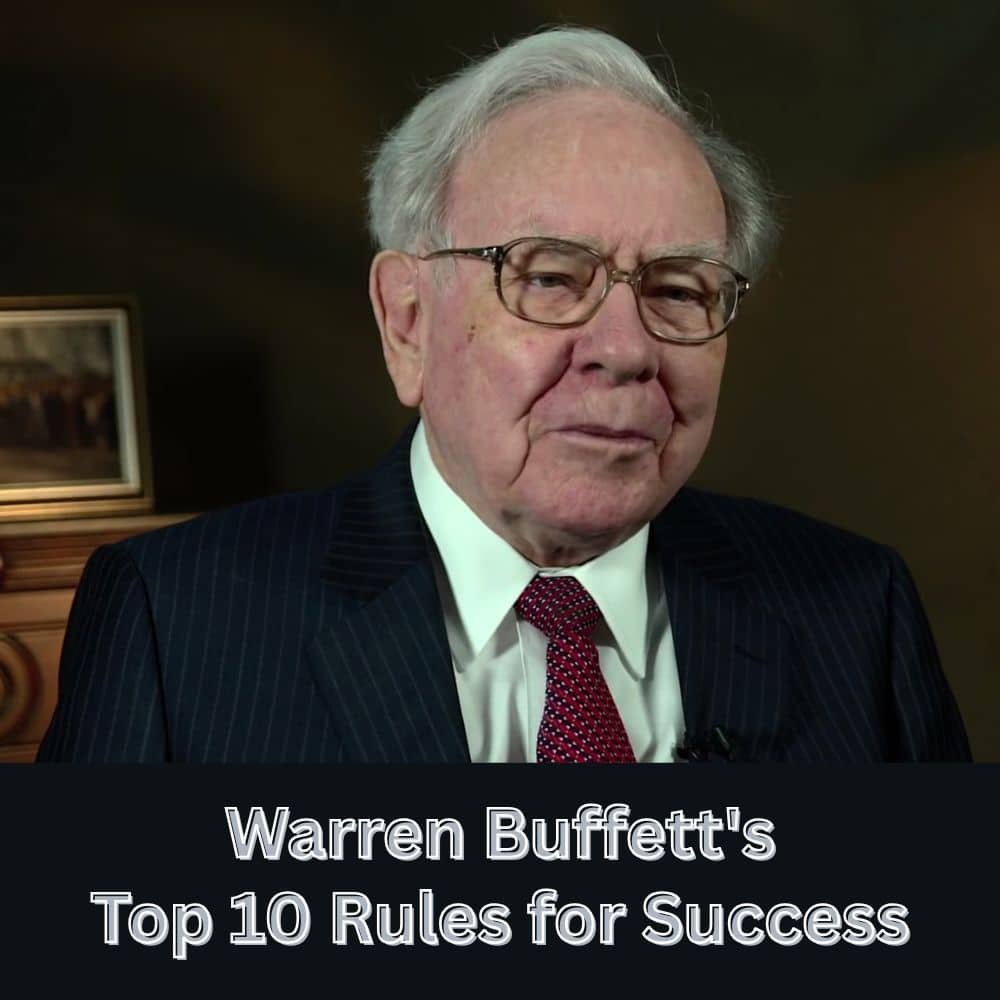
Warren Buffett’s Top 10 Rules for Success to Inspire You

Warren Buffett's Top 10 Rules for Success

Today, I offer you Warren Buffett’s Top 10 Rules for Success, dear reader.

If you want success, then it would be wise to listen to people who have already achieved some success.

Identify what they did to achieve their success and copy it.

If it worked for them, then it will probably work for you.

Now, there are few people more successful in their chosen field than Warren Buffett.

He offers you his ‘Top 10 Rules for Success’ in the video embedded here, and it’s worth your time to listen to him.

They are his top tips, and I recommend them to you.

Make Money

Warren Buffett’s Top 10 Rules For Success:

Please share this post with your friends:

If you found this article useful, then please share it on social media with your friends.

When you share, everyone wins.

So go on, please share it now.

If you can do that for me, I’ll be forever grateful, and you’ll be helping a keen blogger reach a wider audience.

Your support is appreciated, dear reader. Thank you.

Phil Sutton

Articles you might find interesting:

How much money is enough?

You may feel you would like more money in your pocket, but have you ever asked yourself the philosophical question, “How much money is enough?

If you ask a billionaire, the response is likely to be that no amount is enough. Let’s face it, they become billionaires because they’re constantly driven to make money.

However, other people might modestly settle for, say, $1 million.

People who are a little more thoughtful might give you a different number, somewhere between the two extremes, possibly.

Make Money

We all need money, and we all want a decent standard of living.

However, always remember that there is a cost to chasing money. And that cost, among other things, is the impact it has on your time.

We can get more money, but we can never get more time. We all get 168 hours each week, and that’s it.

So, there comes a point where there might be a better way to spend your time than to chase more money.

And you’ll never know if you’ve reached that point if you don’t define it.

Studies have shown that happiness doesn’t increase beyond an income of around $70-80k per year.

That might seem modest, but it’s probably a comfortable living in most parts of the country.

However, it’s not enough to drive a new Mercedes every three years and vacation in Europe with the family every summer.

It would be tough to send your child to Harvard on a $70,000 salary.

So, ask yourself, How much is enough?

The answer is that it all depends on you and your circumstances.

To consider how much you need to live fully, think about the following:

How old are you?

How much longer can you reasonably expect to live?

If you’re 90, you probably require less money for the rest of your life than people in their 20s and 30s.

There are actuarial tables that can tell you how much longer you’re expected to live. However, you should plan to live longer than expected!

You will find an example of actuarial tables HERE and you might find this useful.

How much are your monthly expenses?

What would your expenses be if you were living the life of your dreams?

Let your imagination run wild. What expenses would you have?

A new bowling ball each year or a second house in Vail, Colorado? A housekeeper? A thoroughbred racehorse?

It’s your life. Determine how much it would take to finance what you think is your ideal life.

Who are you responsible for?

Do you have three children who will attend college in the next 10 years?

Do you have a spouse who doesn’t work?

Do you care for an ageing parent or parents?

For how long do you expect to have responsibility for financially providing for others?

Ultimately, you must consider every potential demand on your wallet or purse.

What is your current debt situation?

Do you have 20 years left on a mortgage hanging over your head?

Significant medical bills?

Credit card debt to repay?

Debt must be financed, and repayments must be made. So, you can’t ignore debt.

None of us can go on forever. At some point, we must all take life at a slower pace.

So, when would you like to retire, and how much do you need each month to live comfortably?

How would you like to spend your retirement?

Do you want to travel regularly?

Play golf every day?

How much would a typical month in your ideal lifestyle retirement cost?

What toys do you want to own? And by that, I mean serious toys.

A plane? A Porsche? A boat? A holiday home in Aspen or Tuscany? Swimming pool? Motorcycle?

If they give you pleasure, then it’s reasonable to work towards owning them

Then again, maybe you value your free time above all else and would be happy living a simple life with a Labrador retriever and a large vegetable garden, reading books all afternoon.

The choice is yours. Equally, you can go as far as your imagination will take you.

There are no right or wrong answers to the question, “How much money is enough?

Everything depends on your desires and circumstances.

The number for you might be quite small or very high.

It’s just your number. It’s personal, that’s all.

If you’ve never considered how much money you need, then take the time to think about it.

Having money and financial freedom is great for a couple of things, in particular solving problems and providing choices.

However, beyond that, it has limited value.

Certainly, it’s a mistake to use money to establish status. Worrying about impressing your peer group should be left to teenagers.

Needing money for the wrong things is limiting. It requires working longer and harder than necessary.

You could be doing other things with your limited time on Earth.

Phil Sutton

Think long and hard about what is most important to you.

Ensure that you develop an income, savings, and net worth to acquire the possessions and freedom that will allow you to live your life the way you desire.

Spend time addressing this important issue, and you might be able to quit working sooner than you think.

However, have money in your head but never in your heart.

And never let your pursuit of money prevent you from spending time with family and friends.

A lonely old age would be a heavy price to pay for wealth creation.

There is little point in being the richest person in the graveyard with no one to mark your passing.

And never, ever forget to spend at least some of your time enjoying yourself. As we say where I come from, you’ll be a long time dead!

7 Money Rules: Personal Finance Decisions Made Simple

Let’s be honest: personal finance doesn’t need to be complicated, but it does need to be intentional.

You don’t need a finance degree, a six-figure salary, or a spreadsheet obsession to master the art of managing your money effectively.

However, what you do need are some clear rules that remove emotion from decisions and put you in full control.

For me, the seven money rules I offer you here are simple, practical, and powerful.

Follow them consistently, and your financial life will start to feel lighter, calmer, and perhaps even a little bit exciting.

Make Money

This is the golden rule of money management.

Before bills. Before subscriptions. Before random spending. You come first.

Paying yourself first means automatically setting aside money for savings or investments as soon as your income hits your account. Even if it’s small at first, the habit matters more than the amount.

Think of it this way: if you don’t prioritize your future, no one else will. It’s that simple.

So, start treating savings like a non-negotiable bill, because the future you is counting on it.


Saving is great. Investing is better.

Money sitting in a bank account is safe, but the interest rate at any given time is unlikely to compensate you for inflation. So, that’s not the way to grow capital.

Investing your money over time is what will provide you with the potential for capital growth.

Committing to investing at least 10% of your income every month puts time and compound growth on your side.

Start where you are now.

The earlier you invest, the harder your money works. And you need it to work hard while you sleep, while you work your day job, and even when you are binge-watching your favourite shows.


This is a simple rule with a life-changing impact.

If you consistently spend more than you earn, no strategy in the world can save you financially. You will be doomed.

If you spend less than you earn—even by a little—you create breathing room, choices, and freedom.

This isn’t about deprivation. It’s about intentional spending.

Spend generously on what matters to you and ruthlessly cut everything that doesn’t.


This one’s tough because comparison is everywhere.

The cars, the clothes, the vacations, the “effortless” lifestyles on social media? Most of it is funded by debt and stress. And that’s a price you don’t want to pay.

True confidence comes from living within your means—not pretending you’re richer than you are.

Build a lifestyle that supports your goals, not one that sabotages them.


If it doesn’t last—and doesn’t earn—you shouldn’t borrow for it.

Vacations, gadgets, designer items, nights out… these are wants, not needs.

Using debt to pay for them means enjoying the moment while the future you pays the bill (with substantial interest).

If you can’t pay cash for discretionary spending, it’s a sign to pause—not swipe.

Live without it until you’ve got the cash to pay for it.


Not all debt is evil—but it must be strategic.

Debt should be used to acquire assets that either appreciate in value or generate income.

Property is a classic example when done wisely.

The key question to ask is:

If the answer is no, rethink it.


Impulse spending is the silent killer of good financial intentions.

Here’s the fix:

Most of the time, the urge fades.

And when it doesn’t? You’ll buy with clarity instead of emotion.

This single rule can save you thousands over a lifetime, without making you feel restricted.


Managing your money well isn’t about being perfect. It’s about being consistent.

These seven rules create structure, confidence, and momentum. They will help you stop reacting to money and start directing it.

You don’t need to do everything at once.

Start with one rule. Then another. Over time, small decisions stack up into big results.

Your money should support the life you want—not control it.

And the best time to take control? Right now.

You’re smarter than you think. You’ve got this!

Phil Sutton

Please share this post:

If you found this article useful, then please share this post on social media with your friends.

When you share, everyone wins.

So please share this post now. If you can do that for me, then I’ll be ever so grateful, and you’ll be helping a keen blogger reach a wider audience.

Thank you.

What matters most in life? People or money?

What matters most in life? People or money? Think about that for a second or two.

Occasionally, I’m sure we all think to ourselves, “Wouldn’t it be wonderful to be rich and financially secure?

It sounds fantastic, doesn’t it? Money, money, money!

You’d be able to do whatever you want, travel anywhere, and buy anything.

Whether it’s a nice house, a fabulous car, the best clothes, the latest fashions, or the latest gadgets, you could have them all.

No more searching for cheap flights or even cheaper holidays.

And you wouldn’t have to worry about a job anymore, would you?

Wealth would mean the end to all your problems, surely?

Make Money

Wealth is not a life without problems:

If only it were that easy, dear reader.

Wealth, if you had it, might eliminate some of your problems, but it would also present you with lots of new ones.

Remember, riches may be chains of gold, but chains of gold are still chains.

Everyone has problems, regardless of any wealth and privileges they may enjoy. They’ll just have different problems.

Caretaker of your possessions:

If wealth is something you’ve yet to experience, then it may not be obvious to you, but once you’ve got plenty of money, you become the caretaker of your possessions.

You worry about losing your wealth. And you worry about the volatility of financial markets and how your wealth will be affected, both now and in the long term.

When you’ve got money, plenty of people will be hoping they can separate you from at least some of it. It seems like everyone is trying to sell you something and/or give you advice at a price.

Others will resent your wealth:

And don’t forget, many people will resent you for your wealth. Not everyone will be happy for you, that’s for sure.

Then you become a magnet for criminals, con artists, and even politicians who want a piece of your wealth.

You don’t know who you can trust anymore.

Do people become your friends because they like you, or are they simply after your money?

Once you’ve got wealth, it’s virtually impossible to know.

The impact of instant wealth:

However much you may dream of winning the lottery, for instance, it would have an impact on your life in ways you couldn’t begin to imagine. It wouldn’t solve all your problems; it would present you with many more.

If you’ve suddenly gained wealth and your friends haven’t, then your relationship with them is unlikely ever to be the same again. Even if you share some of your sudden wealth with them, it’s unlikely to help.

Whatever you share with people from your winnings will just create tensions within your friendship group. Why did you give her X, and I only got Y? That will be one accusation you’ll hear frequently, for instance.

What matters most in life? 

If you are wealthy, dear reader, I’m pleased for you. Enjoy it all.

For those people working hard to become rich, good luck to you. I hope you achieve your goals and enjoy your wealth when you find that pot of gold at the end of the rainbow.

However, whatever your financial circumstances, never forget this: only people matter.

You can have all the money in the world, but without your family and close friends, you would have absolutely nothing at all.

It’s the people in our lives that make life worth living.

They make us laugh, and they make us cry. They’re there for us when we need someone to listen, someone to put an arm around our shoulder and tell us that everything will be fine, and someone to give us a pat on the back when we’ve done well.

Money might make life comfortable, but does it make you rich? I don’t think it does.

If your life is blessed with good people who care about you, then that’s when you’re truly rich. If you also have a sense of purpose and a hobby, then you have all you need. Anything else is a bonus.

Money is nice to have, of course, and I wouldn’t discourage anyone from seeking to build wealth. Quite the contrary, you should always be trying to build your little nest egg for the future.

However, money alone will not make you happy. To be happy, your life needs people, purpose, and a pastime.

These are the things that matter.

Money is simply the icing on the cake. It is nice to have, but it is not essential to your happiness. Whereas having people in your life is essential to your happiness.

If you could only have either money or family and friends, which would you choose?

I’d choose the people every time.

Phil Sutton

Please share this post with your friends:

Did you find this article interesting and useful, dear reader?

If so, then please share it on social media with your friends.

When you share, everyone wins.

So go on, please share it now. If you can do that for me, I’ll be ever so grateful, and you’ll be helping a keen blogger reach a wider audience.

Thank you.

How to turn enterprise into money and riches

Today, the question I am exploring is how to turn enterprise into money and riches. But let’s start with a quote.

The media personality and former rock star Bob Geldof’s communication style tends to be blunt and to the point. He’s not a man to sugarcoat his words, or so it seems. However, he does make an important point here.

People may tell you that money isn’t important, but next to oxygen, it’s essential for a life worth living. You couldn’t live long without it today.

Exactly how much money you need depends on your preferred lifestyle, of course. However, even for a fairly basic lifestyle, a reasonable income is necessary.

None of us wants to be poor, of course. Fortunately, we don’t have to be. It’s possible to turn enterprise into money and then money into wealth and riches.

And what do I mean by enterprise? I mean your energy, your resourcefulness, your imagination, your know-how and skills, your ambition, and your determination to make life better for you and your loved ones.

Essentially, you can make your life better simply by making it better for other people.

Make Money

What is work?

The key message today is that you don’t need to be employed by a commercial enterprise or corporation to earn money.

While being employed is one way to earn money, it’s also perfectly feasible to establish your own business and earn a living by being self-employed.

And in the age of the Internet, it’s never been easier to start a business, even if you have very little money to invest.

Remember also that you can start a business initially as a part-time side hustle while being employed until it’s generating enough income for that business to become your primary means of making a living.

And never forget, for most people, the only way you’ll ever get seriously rich is through your own business.

Certainly, unless you’re a Wall Street investment banker or a lawyer, you’re unlikely to get seriously rich being someone’s employee, trading your time for money.

The key to success in business

The key to success in your own business is to find a way to solve problems for people for profit. That’s the way to turn your enterprise into money. And it’s a lot easier than you might imagine.

Let’s face it, there’ll always be plenty of customers for products and services, some of which are yet to be invented.

People will always have problems, and they’ll always need solutions to those problems.

Remember, every product sold by a company is a solution to a problem, or at least it should be.

Turn enterprise into money

-If you continually educate yourself on skills and know-how, then you can create wealth by seeking out customers for whom you can deliver solutions to their problems and/or provide them with services for which they have a need.

If you can satisfy those customers, then you’ll make money, and quite possibly a lot of money, if you can scale up that business as your customer base grows.

Manage your money wisely, and you can build your wealth too.

Determination, hard work, and an eye for problems to be solved are the main ingredients for business success. Your enterprise really can lead you to great wealth.

You don’t have to be poor

You don’t have to be poor unless you’ve given up and you’re just accepting that being poor is your lot in life. It’s not, and nor should it be.

You’re perfectly capable of generating your income, dear reader.

You just need to do stuff for other people and find a way to add value to their lives. In this case, adding value means solving problems or making their lives easier and/or better in some way.

Help yourself by helping others get what they need

It all comes down to your willingness to find a way to serve others. Simple!

There are opportunities there for you to take every single day of the week if you’re enterprising and ready to solve problems for other people. However, you do need to be fleet-footed.

The best time to start a business might have been last year, but the next best time is right now.

And age is no barrier to starting a business either. Remember, Colonel Sanders was 65 years old when he started KFC, and Ray Kroc was 52 when he started building the business we know as McDonald’s.

It can be done, and people do. Why not you? Go on, just go for it! Real riches can be yours.

Good luck!

Phil Sutton

Please share this post with your friends

Did you find this article interesting and useful, dear reader?

If so, then please share it on social media with your friends.

When you share, everyone wins.

So go on, please share it now. If you do, I’ll be forever grateful, and you’ll be helping a keen blogger reach a wider audience.

Thank you.

Articles you might find interesting

How to ensure you are a satisfied customer

Today, I am exploring the idea of how to ensure you are a satisfied customer.

Have you ever been in a situation where someone is trying to sell you something, and seemingly they can’t do enough for you?

They promise so much, and they seem so keen to ensure that you enjoy a ‘great customer experience.’

Then you buy, you part with your money, and suddenly everything changes.

They’d love to help you, but that wasn’t included in the sale price, despite you having been given the impression that it was.

This is particularly true with a service, in my experience.

If you have a tradesman or woman doing work for you, for as long as they haven’t been paid, they’ll do just about anything and everything you ask.

Once they’ve been paid, “they’d love to help you, but they’re far too busy.”

The moral of the story is that paying for a service before you’ve actually received it is always a mistake.

You won’t be well-served if they’ve already got your money; undoubtedly, that’s a fact, I’m afraid.

So my message to you is clear, dear reader. You pay as little as possible upfront and retain as much as possible until the work has been finished to your complete satisfaction.

Do that, and you’ll always be sure to get a job well done. Part with your money first, and you’ll be a hostage to fortune.

Make Money

Please share this blog post on social media:

If you found this article useful, then please share it on social media with your friends. When you share, everyone wins.

So please share now. If you do, I will be ever so grateful, and you’ll be helping a keen blogger reach a wider audience. 

Thank you.

Phil Sutton