How to break a bad habit and improve your life

When it comes to bad habits, we can all be guilty, to some degree, at least. So people often consider the question of how to break a bad habit.

Habits are what we do on autopilot. That is, done automatically without thinking.

Do you have any bad habits, dear reader? Now, be honest with yourself.

I refer to those little, irritating patterns of behaviour you simply can’t help. Those obsessions you may have occasionally. Perhaps you have one or two bad habits you’d really like to break?

Now habits can be hard to break, of course, particularly bad ones.

So here’s another question. Could you break bad habits simply by being more curious about them?

Well, the psychiatrist Dr Judson Brewer certainly has an opinion to offer on that issue.

Dr Judson Brewer studies the relationship between mindfulness and addiction, and in the TEDTalk included in this post, he shares his views on everything from smoking to overeating to all those other things we do even though we know they’re bad for us.

If you want to learn more about the mechanism of habit development, then you’ll find this video interesting, and it’s definitely worth watching.

If you have habits you’d really like to break, then it would certainly make sense for you to learn more about how you developed those habits in the first place.

The more you understand, the better you’ll be able to take action and break those bad habits.

So take a few minutes now and listen to what Dr Brewer has to say. It’ll be well worth a little of your time, I promise.

How to break a bad habit and improve your life
Make Money

How to break a bad habit:

Please share this post with your friends:

Did you find this article and the video interesting and useful?

If so, then please share it on social media with your friends. When you share, everyone wins.

So please share it now. If you do, I will be ever so grateful, and you’ll be helping a keen blogger reach a wider audience.

Thank you.

Phil Sutton

Other articles that might appeal to you:

How we are damaged by our school days

How we are damaged by our school days seems like an oxymoron. However, the idea is worth exploring, I think.

So, could our school days really have damaged us? Do you think that’s even possible?

Were they the best days of our lives, as we’re encouraged to believe, or could our school days have been detrimental to our mental well-being and self-esteem?

I think that is an interesting question.

So let’s think about it for a minute.

Certainly, many people will have had mostly good experiences during their school days.

However, there will also be some for whom their school days will have left them mentally scarred and with a sense of failure. That much is philosophically self-evident, surely?

For instance, perhaps at school, people such as those to whom I refer never quite achieved the grades their parents or teachers thought they should.

Perhaps they were the last to be picked for a sports team regularly?

In either case, how would such experiences have made them feel?

What impact would they have had on their mental well-being?

Perhaps they felt they were not quite good enough?

Possibly a little bit bruised and embarrassed by their inability to achieve what they believed was expected of them?

Adults may have thought that putting pressure on them would motivate them to do well, yet it probably left them feeling inadequate.

Your birth date matters:

Do any of these ideas resonate with you, dear reader? Have you experienced such feelings?

The problem with the school experience is that the age range of our classmates is spread over a whole year. And that’s a lot more significant than it first appears when you’re young.

Someone whose birthday is at the beginning of September will be a year older than someone whose birthday is towards the end of August, despite both being in the same academic year.

Now it might not seem much, but one year at that time in our lives makes a huge difference in terms of our development, both mentally and physically.

So, what does this mean?

It means that if your birthday is at the end of the school year, then you’re at a significant disadvantage relative to some of your much older classmates.

That disadvantage carries with you right throughout your school years if you’re affected by it.

And it’s a disadvantage that extends not just to your academic studies, but also to sports and physical activity too.

Success breeds positive reinforcement:

Most importantly, it’s not just the fact that you’re behind in terms of your physical and mental development. It’s also a fact that success breeds positive reinforcement.

Older students benefit from the constant reinforcement and encouragement of being told, ‘Well done!‘, while younger students struggle to keep up unless they’re exceptionally gifted.

Even if people are of above-average ability for their age, they can still be at a disadvantage relative to older classmates during their school days, particularly if those older classmates are also of above-average ability.

Inevitably, at school, people are compared to their peers, and statistics show that the older ones tend to do better because of an inherent age advantage. That’s true with sports as well as academic subjects.

If younger students appear to perform less well frequently, that’s interpreted as them not being quite as good as their older peers.

Advantage goes with age:

And few people, least of all our parents, recognise that the system essentially does not favour younger members of the class. It puts them at a disadvantage.

The obvious question is, how many people have gone through life feeling like a bit of a loser due to their experiences of a school system that tends to work against them simply because of the month in which they were born?

And how many people never fully recover from the inevitable damage done to their confidence and self-esteem during those all-too-important developmental years?

More importantly, our school days not only affect how we feel about ourselves. They also impact how others perceive us to be as well.

A reputation for being a ‘straight A’ student beats being a bit of an academic ‘also ran’. No one questions whether the former had an inherent advantage over the latter.

How we’re perceived by others matters. Think about it. Their perception of us results in all the negative talk we often hear whenever we express ambition, which can affect our self-esteem.

I’m sure you know what I mean, as no doubt many readers will be familiar with the experience. Something like:-

You:Oh, I’d like to be a doctor.

Parent:Oh, don’t be ridiculous, with your grades?

And so on.

Our need for encouragement:

People will always give you reasons why you’re not good enough when what you need is encouragement.

With encouragement, you could make it in whatever pursuit that makes you feel truly energised.

If you’re someone who experienced disadvantage for whatever reason then let me tell you something. You’re as good as anyone and you should acknowledge that to yourself, constantly.

Schooldays represent a very small portion of life and they’re significant only in so far as they are only one of many experiences we’ll have in life. Certainly, they don’t define you.

If your schooldays were a good experience then fine. If not, so what?

You can still achieve your ambitions with sufficient hard work and determination.

It doesn’t matter whether others believe you can do it, just as long as you believe you can do it.

There’s no such thing as a failure:

Remember; there’s no such thing as a failure. That label does not belong to people.

Failure is just an unwanted outcome and a learning opportunity. It’s not a person.

You have enormous potential. We all do.

Everyone is capable of achieving much more than they could ever think possible. With determination and hard work, we can all achieve great things.

Attitude matters:

Your attitude is much more important than your aptitude when it comes to achieving your goals in life. Believe you can and you will.

However you feel about your past, it’s not too late to become something more than you are now.

You should embrace failure as nothing more than a learning opportunity. It does not define you, and nor should it.

Recognise that just because you didn’t set the world on fire during your school days, it doesn’t mean you can’t achieve great things now.

No correlation:  

Remember; there’s no correlation between success at school and success in life.

Plenty of ‘Straight A’ students fail to achieve anything significant after they’ve left education behind. Whereas plenty of the less academically successful go on to achieve great things in life.

It’s not about how many times you get knocked down that count but how many times you can get back up and keep going until you get to where you want to be.

Victory is sweeter when it has been achieved following the experience of defeat.

You cannot achieve anything without the experience of at least the occasional failure along the way.

We all start as beginners:

Before anyone achieved success, they started as a complete beginner. And along the road to success, they will have made plenty of mistakes. Anyone who suggests otherwise is either lying or deluded.

If you want to succeed, work hard, make mistakes and learn the lessons as you go.

If you’re determined you’ll find a way to achieve your goals and realise your dreams.

Failure’s not fatal:

Don’t be overwhelmed by any perceived failure. It doesn’t have to be fatal, nor does it imply that you’re not capable of achieving great things.

Never, ever give up until you get to where you want to be. Success can be yours if you want it badly enough. And remember this; it is better to try and fail than never to have tried at all.

Never be afraid to try because there are no failures, only outcomes we didn’t want and lessons to be learned.

Daily Mantra:

Reinforce self-belief by repeating this daily mantra

Go on, get started now. Success is waiting for you.

Make Money

Please share this post with your friends:

Did you find this article interesting and useful, dear reader?

If so, then please share it on social media with your friends. When you share, everyone wins.

So please share it now. If you do, I’ll be ever so grateful, and you’ll be helping a keen blogger reach a wider audience.

Thank you.

Phil Sutton

5 secret steps to tackling life and achieving success

If you’re looking for a formula for achieving success, dear reader, then I think you might find this blog post useful.

Many desire success, but few really achieve it. So it’s useful to study successful people, identify their approaches, and use them as role models. If something worked for them, then it might just work for you.

In the embedded video, Hollywood legend, movie star, two-term Governor of California, and former Mr Universe, Arnold Schwarzenegger shares his five secret steps to tackling life and achieving success.

Essentially, these are his five rules to excel at whatever you choose to do.

He has an interesting story to tell, and his story proves that no obstacle is too big to overcome and no vision is too big to achieve if you’re determined enough and you’re prepared to work hard.

Make Money

Change the world:

To summarise Arnold Schwarzenegger’s rules, they are:-

  1. Find your vision and follow it;
  2. Never, ever think small;
  3. Ignore the Naysayers;
  4. Work your ass off; and
  5. Don’t just take, give something back.

However, if you listen to Arnold’s story, his burning desire was to move to the United States and become a big star. This was his reason why.

Initially, he had no idea how to achieve that goal, but a little piece of good fortune came his way.

Arnold happened to read an article in a magazine about a man just like him who achieved just what he wanted to achieve. The article explained how the man did it, and Arnold used that success template as the basis for pursuing his own goal.

Identify successful people and do what they did:

Once he knew his ‘why?‘, Arnold Schwarzenegger just needed to work out a way to get there. Knowing your ‘why?‘ will always, eventually, lead you to your ‘how?’.

Once Arnold knew his purpose and his passion, he was always going to find a way to achieve success. His determination and his willingness to do whatever was necessary saw to that.

Had he not been lucky enough to identify a role model through a magazine article, something else would have guided him because that’s the nature of life. When you’re searching for something, you’ll tune in to all the little clues you need.

Once you know your ‘why?’, you develop a keen sense of that subject and everyone else involved.

Trust yourself:

If you know your why, then you’ll have the drive and determination to pursue your goal.

Nothing happens by accident, of course. You must make it happen.

So figure out for yourself what it is you really, really want. What would make you happy? What would you regard as a real achievement?

Then find a role model.

Someone who’s done what you want to do. Identify how they did it and copy what they’ve done. If their approach worked for them, it can work for you.

Avoid distractions:

If you want to be successful, then don’t allow ‘time sucks’ to throw you off course.

Television and social media are the biggest time wasters of all. So avoid them.

Time is a precious resource, and successful people don’t waste it. So if you want to be successful, don’t waste your time either. Put every minute to good use.

Know your ‘Why?’

The key message today, both from this article and the embedded video, is that you must:

That’s the starting point for success.

So if you’ve yet to do that then I suggest that’s where you start, if you want to be successful.

And remember this; if not you, who? If not now, when?

Achieving success is possible and people do it all the time. So can you, if you’re determined and prepared to work hard enough to get it.

Good luck.

Phil Sutton

Please share this post:

If you found this article useful, then please share it on social media with your friends. When you share, everyone wins.

So go on, please share it now. If you can do that for me, I will be ever so grateful, and you’ll be helping a keen blogger reach a wider audience.

Thank you for your support.

Articles that might also appeal to you:

Why should I be positive?

Have you ever asked yourself, why should I be positive?

Living in the modern world is increasingly challenging, wouldn’t you agree?

So, it’s easy to think, “To hell with it! I’m done with being nice.

However, a poor attitude is like having a broken-down car. It won’t get you very far. It won’t make you happy either.

Make Money

Attitude matters:

Attitude is a subject I return to frequently. And I do that because, from experience, I know it matters.

You may think having an attitude is a good thing. Perhaps it is if your ambition is to be a rock star. However, in almost every other life situation, it won’t work for you.

You’re unlikely to find an employer who is impressed by a negative attitude. So, no employer will be keen to hire someone with a negative attitude.

Most hiring managers have enough problems to deal with each day without adding to them by hiring someone with a chippy attitude.

And if you’re seeking to make new friends or form a relationship, then again, you’re unlikely to impress anyone if you have a negative attitude.

Why would anyone else want their life burdened by a friend or partner with an attitude problem?

Life is hard enough for most people without them having to put up with someone who is high-maintenance because of their attitude.

I can tell you this: Your life will be much, much better if you start developing a positive attitude.

Fail to do that, and your life is unlikely to be enjoyable. The choice is yours.

Life’s what you make it:

Your life will be what you choose to make it.

It’s true; it won’t be perfect. It’s true; you’ll have bad times as well as good. Everyone does. However, if you’re positive, it’ll be easier on your nerves, at least.

Look for the positive in every situation. There’s always something positive there, however small.

So go out, be positive, and it will take you further than you might imagine, I promise you.

Phil Sutton

Please share this post with your friends:

If you found this article useful, then please share it on social media with your friends.

When you share, everyone wins.

So go on, please share it now.

If you do that for me, I will be forever grateful.

You’ll be helping a keen blogger reach a wider audience.

Thank you for your support, dear reader.

Articles you might find interesting

How to improve your life quality and have much more

How to improve your life quality? That’s a question we often ask ourselves when life does not quite meet our expectations.

Embarrassed by circumstances

Have you ever been embarrassed by your limited circumstances?

Consider a situation. Perhaps all your friends were going on a night out, but you couldn’t join them because you simply didn’t have the money.

You wanted to join them, of course, but wealth and financial freedom were nothing but a distant dream for you at the time.

Perhaps you haven’t had that particular experience, but something similar, possibly? The actual situation for you may have been different, but your sense of embarrassment will not have been any less painful and hard to bear, I’m sure.

In one of his audio programs, the late Jim Rohn tells a story about an event that drove him to take a very close look at his life.

A Girl Scout called at Jim’s house one day to sell Girl Scout Cookies as part of an annual fundraiser. In exchange for the cookies, all she asked for was just two dollars.

This was many years ago, of course, but even then, this was not a huge sum of money.

However, Jim’s problem at the time was that he didn’t even have two dollars to spare, so he was reduced to lying to the poor girl. At this point, wealth was something Jim had yet to encounter.

How to improve your life quality

Money does matter

Now, some people will tell you that money doesn’t matter, but it does. In our world today, you can’t live without money any longer than you can live without oxygen or water.

Exactly how much money you need depends on your preferred lifestyle, of course. If you don’t want much out of life, then you’ll get by on very little money.

However, most of us do want more out of life; hence, having at least a degree of wealth does matter.

Wealth and financial freedom

Put simply, wealth means financial freedom.

Financial freedom, in turn, means you can do what you want whenever you want without feeling constrained by your circumstances.

A worthy aim, therefore, is to decide what you want out of life and then start working towards building your wealth.

Make Money

It all starts with change

Have you ever thought to yourself, I don’t want to live like this anymore?

Perhaps you’ve said to yourself, I want more out of life.

You want more, but the problem is that you have no idea how to change your circumstances, right? If you need a little help, then don’t worry, dear reader; you’re not alone.

However, one thing you must accept is that unless you change, nothing will change.

You must increase your value

Perhaps you look at your salary each month and think, How can I start building wealth when this is all the company pays?

If that’s how you think, then you’ll need to change your philosophy or the way you look at things.

The salary you get may be all the company pays you, but it’s for the value of the contribution you make.

There will be other people who are paid a lot more than you. They’re paid more than you quite simply because they’re considered to be more valuable than you to the company.

I’m not suggesting that you’re not valuable. You are valuable as a father, a mother, a brother, a sister, a friend, or even a colleague.

However, my point reflects your economic value to your employer.

It’s a fact that if you’re in a low-skilled job where there’s an oversupply of potential replacements for your services, then you won’t earn much. That’s simply the economics of supply and demand.

However, just because you’re not more valuable now doesn’t mean you can’t become more valuable.

You can increase your skills with a little effort on your part, and you can become more valuable. Become more valuable, and your income will rise.

So while your circumstances may be limited right now, they don’t have to remain that way.

You can work on yourself and improve yourself. It’s all about self-improvement and personal development.

Success can be yours

Success doesn’t just happen to people. No one just gets lucky.

If you asked the CEO of a multi-national corporation how he or she got to where he or she is today, the response is unlikely to be, “Well, I just showed up for work each day, and they just kept promoting me.

No, people have worked very hard to get to a lofty position in life. You don’t get anywhere without hard work.

However, you attract success by the person you become, and you really can become more than you are now.

Jim Rohn suggested that profits are better than wages, and he had a point.

Every rags-to-riches story I’ve ever heard always involves someone’s own business. They started their own business, worked very hard, and one day they became very rich.

Phil Sutton

Build a business

Now you’re probably thinking, I don’t have the money to start my own business, and I can’t afford to give up my job on a whim.

That’s all true, I’m sure, but some people keep their job initially and start their own business as a part-time enterprise.

Jim Rohn himself built his success that way.

Jim began life in modest circumstances, but he went on to become a millionaire and one of the most influential thinkers of our time. And in case you’re wondering, no, he didn’t go to university.

It can be done; people do, and you can too.

Just make up your mind to start working on yourself.

Increase your value and look for opportunities to solve problems for people.

Solving problems is the basis for any business. Every product should solve a problem for consumers.

The psychology of wealth

There’s psychology linked to building wealth, and you would be wise to understand it.

In the embedded video included here, the late Jim Rohn explains the psychology of wealth and provides a lot of sensible advice.

Jim was a successful man by any measure, and it’s always worth listening to people who’ve achieved success. They know what they’re talking about because they’ve been there and done it.

He offers simple messages that are thought-provoking and powerful.

This video is well worth your time, and I recommend it to you. Watch it now while you have the chance.

How to improve your life quality


Recommendations for your library

I think the late Jim Rohn was one of the best motivational speakers I’ve ever heard, and he’s been a big influence on me; that’s for sure.

He’s produced many books, videos, and audio programs over the years, and all of them would add real value to your library.

Two I can strongly recommend you add to your personal reference library are:

Book: Seven Strategies for Wealth & Happiness by Jim Rohn

Audio Program: The Art of Exceptional Living by Jim Rohn

I purchased both of these some time ago, and I still use them constantly as sources of inspiration and motivation.

The audio program is particularly useful, as I listen to it while driving. This means I can use my travel time profitably. Why listen to the radio when you could be listening and learning while you drive?

Purchasing these items represented money well spent for me, and I’ve found them enormously useful. I strongly recommend them to you.

Even if you don’t buy them, they’re certainly worth considering. Go check out Jim Rohn’s books and audio programs now while they’re fresh in your mind.

Should you make a purchase, you will not regret buying them. I’m very confident in that.

Please share this post with your friends:

Did you find this article interesting and useful, dear reader?

If so, then please share it on social media with your friends. When you share, everyone wins.

So please share it now. If you do, I’ll be ever so grateful, and you’ll be helping a keen blogger reach a wider audience.

Thank you.

Articles you might find interesting

Daily Habits of Successful People

If success is your aim, can you learn from the daily habits of successful people?

Certainly, I believe quite strongly that we are what we do daily.

Anything you achieve or don’t achieve is brought about by the habits you develop over time.

Everything you do is a result of your habits, good or bad. So surely it makes sense to develop and maintain good habits and make them your master?

The power of repetition:

Habits, good or bad, are formed through repetition.

Good habits can be hard to form, but they’re easy to live with. Whereas bad habits, whilst easy to form, tend to be very hard to live with. Our lives can become a battle of good habits versus bad habits. Don’t let the bad habits win.

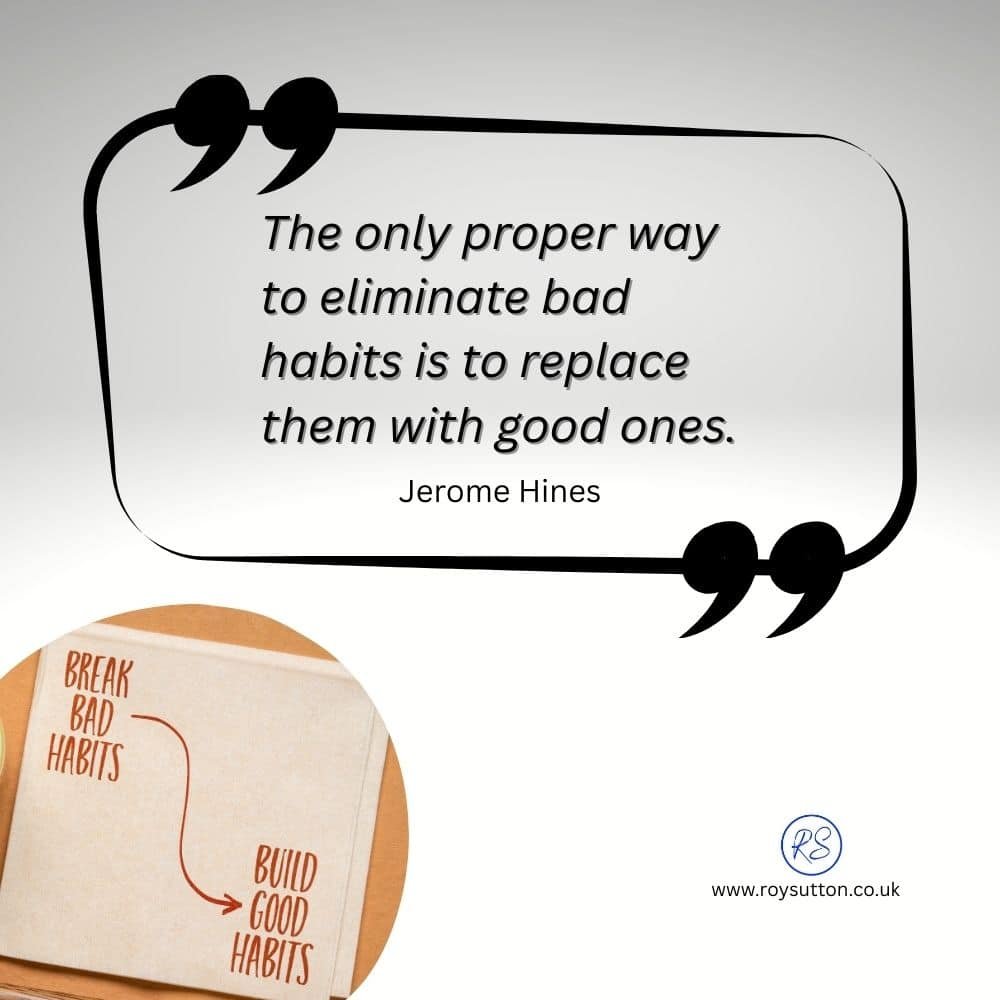
Good habits can be learned, and bad habits can be replaced by good habits. Yes, it requires self-discipline on your part, dear reader, but it can be done, and people do.

Decide on the habits you want to develop and focus on achieving them one at a time.

Start with one good habit:

Start with one good habit you’d like to form and then force yourself to repeat the necessary actions daily.

After around three weeks, that habit will be formed, and it will just become part of your routine. You’ll start to repeat it with little or no thought. Essentially, you’ll do it on autopilot.

If you have a bad habit you wish to replace with a good habit, then each time you find yourself about to perform the actions of the bad habit, stop yourself and perform the actions of the good habit instead. Again, after around three weeks, the good habit will be programmed into your brain.

Make Money

Self-discipline is key:

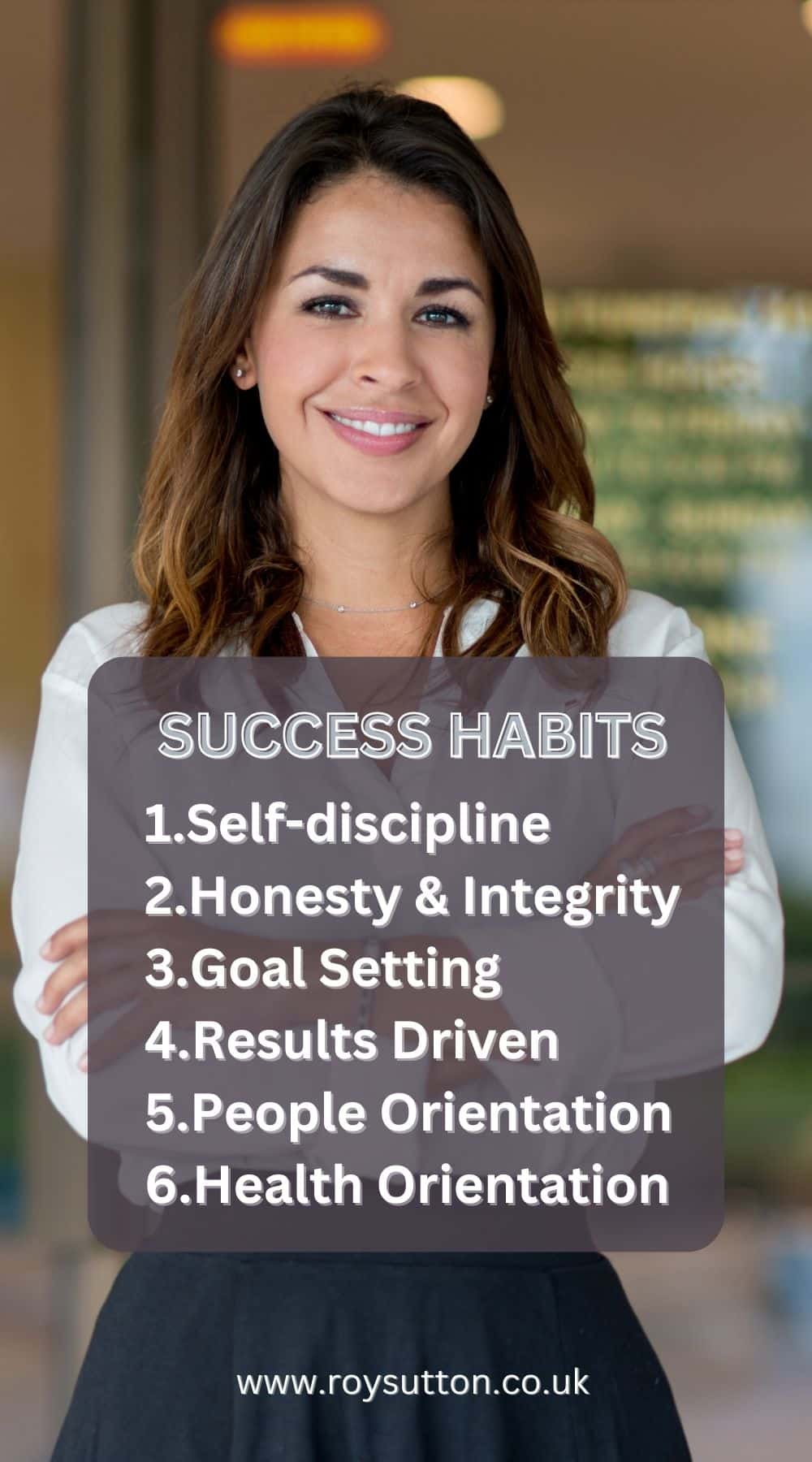
Successful people are driven to develop good habits. Self-discipline is the key ingredient for good habits to form and for replacing bad habits.

Successful people also establish the habit of goal setting on a daily basis.

You cannot hit a target unless you can see that target. Setting a goal is the first step in achieving that goal. Successful people are results-oriented.

Successful people are also people-oriented.

The power of helping others:

You get what you want in life by helping other people get what they want.

Every product is a solution to a problem. Even if your goal is to sing or dance, to succeed you must always recognise that you perform to and for people.

They have a need to be entertained and your aim is to fulfil that need. To solve this particular problem for them if you like.

In dealing with people you must be honest and show integrity if you are to win the respect of others.

So honesty is a good habit to develop. Dishonesty and cheating will catch up with you and will be a permanent stain on your reputation. You don’t need that now, do you?

Look after your health:

And above all, you must look after your health. You have one body and one mind and they must last you a lifetime.

So develop the habit of taking good care of both.

To reinforce the message of the importance of repetition and routine I‘ve included this excellent video from Brian Tracy.

Brian is always a source of great advice for anyone seeking success and aiming to create a successful life for themselves and certainly, he’s one of my main sources of constant inspiration.

The video is short but well worth your time and I recommend you watch it now.

Habits of successful people:

Further Reading:

Regular readers will know that I am keen on building a personal reference library of books and audiobooks, which I use to inspire and motivate me and to help me achieve my goals. And I would encourage you to do the same, dear reader.

In the video, Brian Tracy refers to his book Million Dollar Habits: Proven Power Practices to Double and Triple Your Income. This is an excellent book and would be a good addition to your library. You can take a look at the print and Kindle editions if you click on the link in this paragraph.

However, I must be honest and tell you that, actually, I decided to purchase Million Dollar Habits: Proven Power Practices to Double and Triple Your Income (AudioBook). Personally, I find the audiobooks really useful because I can listen to them whilst I’m driving, which means I’m making better use of what would otherwise be dead time. If you’d like to take a look at the audio version of the book, then, once again, just click on the link in this paragraph.

If you’re looking for useful articles on this subject that are free to read, then you might want to take a look at The Habits of Highly Successful People, which has been published on the Porch website. This is an interesting article and is worth a few minutes of your time.

Phil Sutton

Please share this post with your friends:

Did you find this article interesting and useful dear reader?

If so, then please share it on social media with your friends. When you share, everyone wins.

So please share it now. If you do I’ll be ever so grateful and you’ll be helping a keen blogger reach a wider audience.

Thank you.

How is success achieved? Could this be the secret?

How is success achieved? Certainly many desire it, but few achieve it. Why is that, do you think, dear reader?

Could it be all about your mindset? Can your thinking have an impact on whether you succeed or not?

In the embedded video, Carrie Green suggests that your mindset matters.

Make Money

Programming your mind for success:

This is an inspirational talk on success by Ms Carrie Green, who gave it at TEDxManchester.

Her underlying message is that success is never achieved by accident.

I’d not heard Carrie Green speak before I stumbled on this video, but I must say I’m very impressed.

If you can spare a few minutes, then this video is well worth a little piece of your time. I’m confident that you won’t be disappointed. Recommended.

Phil Sutton

Please share this post with your friends:

Did you find this article interesting and useful, dear reader?

If so, then please share it on social media with your friends. When you share, everyone wins.

So please share it now. If you do, I’ll be ever so grateful, and you’ll be helping a keen blogger reach a wider audience.

Thank you.

Go Explore London

10 steps for making new year’s resolutions

If you’re wondering about steps for making New Year’s resolutions, dear reader, this article is for you.

As a new year approaches, it’s natural to think about the year ahead and how it might be appropriate to make some resolutions to be improved versions of ourselves.

Perhaps we feel it’s time to reinvent ourselves. Maybe we recognise that we’d be better off if we could get rid of some bad habits or possibly develop a few good habits. Lose a little weight, perhaps? Then again, maybe we think it’s time to start our own business with the goal of becoming financially independent.

Whatever it is we have in mind, the new year is a new beginning, so we often see it as a vehicle for change. We think it will provide us with the motivation to make changes in our lives. However, rarely does it work out that way successfully. Certainly not for most people, in my experience.

All too frequently, we promise ourselves that we’ll do this or that, but as January progresses, we forget we’ve even made a New Year’s resolution. And that doesn’t really help us at all, does it?

So, if you’re thinking about making some New Year’s resolutions, dear reader, make sure you don’t set yourself up for failure.

Successful change is achieved in small steps, not giant leaps.

If you’re going to make some resolutions, make sure they’re achievable. Make resolutions that are hard to keep, and they won’t be kept. Simple!

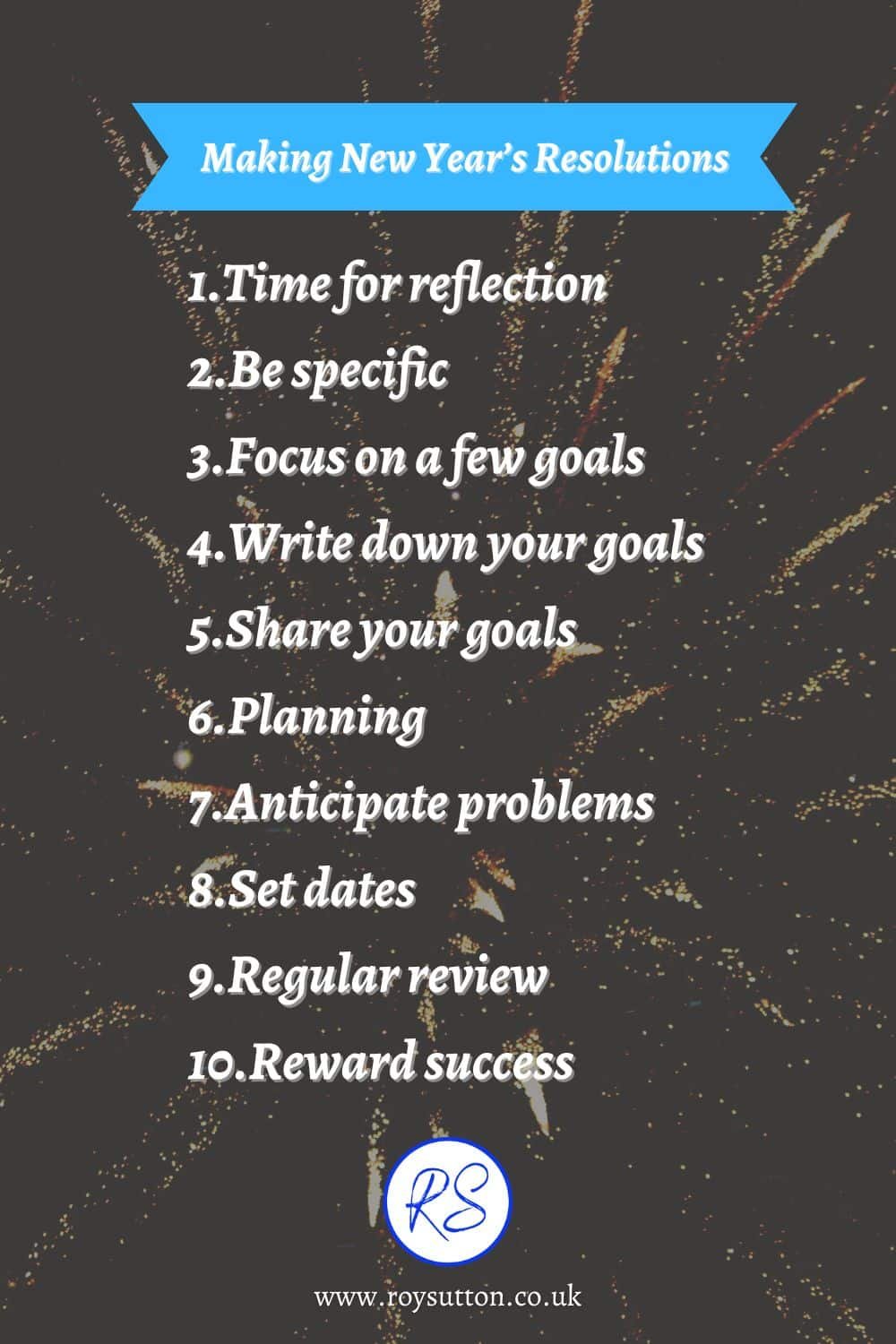
Here are 10 steps for making New Year’s resolutions you can successfully stick to for the long term:

Steps for making New Year's resolutions

Steps for making New Year’s resolutions:

1. Time for reflection:

The first step is to spend some time thinking about where you are in life and where you’d like to be.

What have you accomplished so far, and what would you like to accomplish in the future?

Where have you struggled, and why? Perhaps your skillset needs improving, or maybe you have some really bad habits that you should eliminate.

Spending some time on reflection should help you identify areas of your life that you want to focus on improving in the new year.

However, let me stress once again, think in terms of small steps rather than giant leaps.

2. Be specific:

If goals are to be achievable, then they need to be specific.

Rather than say, I want to lose weight. It’s much better to say, My goal is to lose 16 pounds by the 1st of March.

With that goal, you’ll know you must lose two pounds every week if you’re to achieve your target.

Then you can start focusing on related issues like diet, calorie count, exercise and so on.

3. Focus on a few goals:

You’re not going to achieve 20 goals in the new year. Most of them will get lost very quickly.

Decide on one, two, or possibly three things you’d like to achieve, and then prioritise them.

4. Write down your goals:

You’ll have a much greater chance of success if you commit your goals to paper.

Psychologically, it will have an impact on you if you write them down. It will seem like a true commitment, and it will drive your unconscious mind to think about what needs to be done.

5. Share your goals with someone:

Sharing your goals with a friend will again reinforce your psychological commitment to those goals.

This will help you stay motivated, and it means that you make yourself accountable as you’re working towards achieving your goals.

Let’s face it, no one wants friends or family members to know that we failed. So, if they know you’re committed to a goal, you’ll have no choice but to make sure that you achieve it.

6. Planning:

For each of your goals, you must plan accordingly.

Break each goal down into its constituent parts and come up with a plan as to how you will achieve them.

Really, this just means breaking your goals down into smaller, actionable steps and then creating a timeline for completing each step.

7. Anticipate problems:

Reaching goals is never easy. There will always be problems along the way. That’s just life.

So, make a list of the potential problems that might occur at certain times of the day, in given situations, or with certain people as you work towards achieving your goals.

Once you’ve identified the potential problems, you can then work out ways that will help you deal with them as and when they occur. In short, be prepared.

8. Set dates:

This is all about being specific again, and it fits into the planning process.

When will you get started?

When will you achieve your goal? By what date, specifically?

Be realistic, but challenge yourself too.

9. Regular review:

Right, you’ve set goals, you’ve got a plan in place, and you’ve set dates for starting and completion.

The next step is to set regular intervals to review progress.

This might be weekly, monthly, and/or quarterly. Whatever seems appropriate, depending on the goal.

As you review progress, you’ll be able to identify whether small adjustments need to be made to your plan to achieve your goal on time. 

Obviously, you’ll need to be flexible and willing to adjust your goals and plan as required.

10. Reward success:

To achieve your goal, you’ll need to be very disciplined, of course, but it also helps if there’s a potential reward at the end of the process.

So, promise yourself a suitable reward if you achieve your goal.

Success deserves to be rewarded.

Make Money

Concluding remarks:

We’ve all made resolutions over the years that have come to nothing.

It’s easy to say what we plan to do, but it’s much harder to do it and achieve our end goal.

However, just because you’ve failed with resolutions in the past doesn’t mean you’re doomed to fail in the future.

Set your resolutions carefully, approach them methodically, and don’t give up until you get to where you want to be.

It can be done, and people do. So can you!

Now that you know how to make a New Year’s resolution, you’re one step closer to achieving your goal.

Remember, small steps and not giant leaps.

Good luck!

Phil Sutton

Please share this post with your friends:

If you found this article useful, then please share it on social media with your friends.

When you share, everyone wins.

Please share it now, and I’ll be ever so grateful.

You’ll be helping a keen blogger reach a wider audience.

Thank you for your support, dear reader.

Go Explore London

Other articles you might also find interesting:

How to develop effective time management skills

Time Management Skills:

Developing effective time management skills is an essential ingredient for success, and I’m sure you’ll agree. You can’t add real value without making the best use of your time.

However, making the best use of it is not always easy in practice, is it?

So, how good are you, dear reader, at managing your time?

Do you have a reputation for being ruthlessly efficient and productive, or are you someone who’s always struggling to keep up?

When someone asks you to do something in the office, do you accept their request without question and simply add the task to your ‘To Do’ list? If you do, you’re not alone. Many people will do that, in my experience.

Alternatively, perhaps you’re the type who thinks carefully relative to your priorities before you accept such a request. Now be honest. We’d all like to think we’re the latter, when in fact far too many people are the former I think.

Time Management Skills
Make Money

Productivity is what matters:

In the world of work, it’s easy to confuse being busy with being productive, but these two concepts are not the same thing at all, are they?

For instance, you can be busy doing things that don’t need doing at all. Whereas being genuinely productive means delivering real results from high-value tasks, which can only be done by someone with your skills.

And let’s face it, reputations are built by being productive, not merely by being busy. It’s the results you deliver, not the energy you expend, that matter most.

Time is your most precious resource:

How often do you hear someone say, “Oh, I would love to do that, if only I had the time.

And yet we all have the same amount of time, i.e. 168 hours per week.

Time is simply a resource like money, although it’s more important than money. I say that because you can get more money, but you can’t get more time. None of us can do that, can we?

So you must learn to use your time wisely. Time is your most precious resource, so you must develop effective time management skills.

High-value tasks must take precedence:

Modern pressures mean it’s easy for us to try to do too many things. We can all be a bit like that, including me, dear reader.

Our lives are cluttered with too many activities, too many objectives, too many distractions, and far too many demands on our time.

The result is that we tend to lose focus on what matters most and in the end we don’t do anything as well as we should have done.

In my experience, in most jobs, you’ll find that 90% of productivity is down to completing the top three or four major activities within that job. What I call high-value tasks.

If you take the top three major activities – the high-value tasks – associated with your job and focus on those to the exclusion of just about everything else you’ll almost certainly maximise your productivity and efficiency.

Most common time management mistake:

The problem is, when we’re working, we seem to find it easier to focus on minor tasks and random actions requested by other people.

We feel obliged to accept requests from others. It’s a common mistake of which we can all be guilty.

Now, while tidying up all those minor tasks might make us feel like we’re achieving some quick wins, we’re usually fooling ourselves.

By the end of the day, we’re usually left with a sense that we haven’t done all we should have done, and that leaves us feeling stressed.

And that’s when we start to think about how we might improve our time management.

Saily eSIM

We can’t do everything, nor should we try:

We must recognise that we can’t do everything, but we can be selective about what we choose to do.

And if we’re going to get those major tasks of higher value completed, then they must take precedence over those low-value, minor tasks, which can always wait if necessary.

High-value tasks should always take precedence over low-value tasks.

Work smarter:

People often think of time management as a skill that would allow them to work faster. Well, let me tell you this: that’s not the idea at all.

Effective time management skills allow us to work smarter rather than harder.

Instead of getting lost in the minutiae of everyday life, with effective time management skills, we focus on and prioritise those things that will add the most value to our productivity. In other words, we focus on high-value activity.

The law of three:

So. if time management is an issue for you, dear reader, start by taking a good, hard look at your list of daily activities and asking yourself these three questions:

  1. What single task can only I do and, when completed by me, will add the most value to the business?
  2. What’s the second task on my list that only I can do, and when I’ve completed it, will allow me to add the most value to the business?
  3. What is the third task on my list that only I can do and that, when completed by me, will add the most value to the business?

Once you’ve identified your list of three major, high-value tasks, that’s where your focus should be each day before you touch any other minor tasks or accept random requests from other people.

Phil Sutton

Most powerful time management tool:

The point of work is to deliver results. You’ll deliver the best results if you concentrate on your top three major tasks first.

And never forget that you’ll be judged by the results you deliver. No one cares what you have to do for someone else, they only care about the results they expect from you.

Your time is your time, and you must decide how it is to be used most effectively.

Just because someone asks for a piece of your time doesn’t mean you’re obliged to give it to them at the expense of your productivity. Never be afraid to deploy the most effective time management tool of them all.

And what is the most effective time-management tool? It’s the word NO.

Think of the word NO as a baseball bat.

Whenever someone requests that you do something, NO is how you can whack that request right out of the ballpark.

Be in control of your time, at all times:

You’re not obliged to agree to a request even if someone asks nicely. It’s reasonable to be working to your priorities.

All too often we feel obliged to do things for other people when we should have just said politely, “No, I’m sorry, but I can’t do that right now for you because I have to deliver this by 5 pm and it’s a priority.”

If our productivity matters to us, and it should, then our focus should always be on our major, high-value deliverables.

Unfortunately, we allow ourselves to be driven by the agendas of other people.

However that’s not good for our productivity, nor is it good for our well-being or stress levels.

People will take everything you’re prepared to give:

I can tell you from experience that other people will take everything you’re prepared to give and a bit more besides. That’s the nature of people.

However, if you fail to deliver what you’re being paid to deliver, then no list of incidental work completed for other people will be accepted as an adequate plea in your defence when your boss wants to know why you’ve failed to deliver your high-value results.

If you’re painting my house, I’ll measure you on the quality and timeliness of your work, not the amount of help you gave to my neighbour by, say, looking after her dog.

What you do for other people is irrelevant to me, should you fail to deliver what I’m paying you to deliver.

Focus on your priorities:

In reality, if your colleagues can’t get something done by you, they’ll simply ask someone else. So let them.

Why worry? Just be very polite when faced with a random request, but say NO firmly. I can tell you this: you’ll have to be disciplined, but it’s a habit worth developing.

We can all be guilty of expending far too much of our energy helping other people achieve their aims, to the detriment of our interests and our ability to deliver high-value results.

To achieve anything of significance in life, we must be focused on our major activities.

We must concentrate on completing our big three major high-value deliverables daily and focus relentlessly on working towards achieving our own goals generally.

The need for balance:

If you’re asked to do something, then it’s perfectly reasonable to say NO, if doing otherwise would prevent you from delivering the results you’re being paid to deliver on time.

Yes, of course, occasionally there will be tasks you’re obliged to accept for whatever reason.

However, mostly being firm in declining such a request is a sign that you’re assertive and in control of delivering as much value as possible.

Another polite but firm response to a request might be something like, “Sorry, I would love to help you with that, but I cannot right now because I have my hands full with the deadline for this project.

As with everything, there is a balance to be struck, of course.

Sometimes it’s in your interest to do someone a favour because one day you might need them to return that favour. That’s reasonable, provided you always retain a primary focus on keeping your main things the main things.

Conclusion:

You should always ensure that you’re making progress towards achieving your big three deliverables and your own goals generally.

It’s perfectly reasonable to have your agenda and a desire to achieve your own goals and add the greatest value only you can add.

If you want to make a difference, focus on your three major activities.

Those activities that only you can do.

And to ensure that you’re doing that, don’t be afraid to use the most effective time management tool of them all whenever necessary. Use the word NO politely but firmly.

Always keep the main things the main things.

Phil Sutton

Please share this post with your friends:

Did you find this article interesting and useful?

If so, then please share it on social media with your friends.

When you share, everyone wins.

Go on, please share it now.

If you do, I will be forever grateful, and you’ll be helping a keen blogger reach a wider audience.

Thank you, dear reader.

Make Money

Articles you might find interesting:

How to sell anything to anybody and make money

Selling is a subject that often gets a bad name. Some people even look down on those who make their living by selling.

However, we’re all trying to sell something all the time. Even if it’s just the skills we have or a service we can provide. Let’s face it, if we’re to make a living, we must sell something. If you think about it, I’m sure you’ll agree, dear reader.

Learning the art of successful selling is very important. Everyone should hone their selling skills, even if it’s just to sell themselves effectively.

Selling is a process, and by learning a few simple techniques, you can improve your ability to sell.

So what are these techniques?

Make Money

How to sell anything to anybody

1. Know your product:

Ultimately, it’s all about the product.

If you want to sell anything successfully, you must know your product. You must believe in the product too.

That product has to be something that you would buy yourself.

You need to know the product in detail. You need to know the features and benefits. You must be able to explain the advantages and the disadvantages.

Then you need to know all about your competitors’ products that your customers could buy as an alternative to your own.

This is important if you are to position your product against that of the competition and counter any reasons given by your customers as to why they might be reluctant to buy from you.

You need to be able to talk about your product favourably, relative to any other options that may be available to your customer.

2. Know the problem your product solves:

Ultimately, every product must solve a problem for the customer. A product must make the customer’s life easier in some way.

If a product doesn’t solve a problem for the target customer, why would they buy it? Why would any customer part with their money unless the product made their life easier?

So it’s simple. You must have a good understanding of the problem or problems for which your product can be an excellent solution.

And you must be able to explain this in simple, straightforward language.

3. Capture buying intent:

Cold-calling is the most inefficient and soul-destroying sales approach there could possibly be. Phoning or door-stepping people and saying, “Want to buy this?” will have a low success rate.

The key to successful selling is capturing warm sales leads. In other words, you must capture buying intent.

If a customer walks into a shirt shop, then you know they’re looking for a shirt, and therefore you have a very good chance of selling them one.

So find ways to engage people who are actively looking for something like the product you are selling.

To do this, you’ll need to ensure that your customers and potential customers have visibility of your product.

You must raise awareness of the product, as well as the features and benefits and the value it offers. You must create desirability too.

4. Know the customer’s needs:

Your product should have a target customer. You must know the sort of person for whom the product offers an ideal solution.

In other words, you must know who the product is aimed at and what their needs are likely to be.

To understand the customer’s needs, you may need to ask some questions first.

For instance, using the shirt-selling example again, a customer may be looking for something to wear for a formal occasion, or perhaps they’re looking for something more casual. You want to ensure that the shirt you sell them is right for their needs.

So you must identify the ways in which your product will satisfy the customer’s needs because, if you make a sale, you want the customer to feel they’ve got exactly what they wanted.

You want to ensure that they get a good buying experience. You certainly don’t want them to feel like they’ve been cheated in some way.

5. Build trust with the customer:

Trust matters, particularly when selling big-ticket items.

Customers need to feel that they can trust you to deliver a quality product and provide excellent after-sales service.

Far too often, people pay good money only to be let down. So naturally, they’re wary of salespeople, particularly when high-value products and services are involved.

Take the time to build trust with customers and reassure them that they will get what they’re paying for, and, should there be any problems at all, you will be there to ensure any such problems are resolved quickly and efficiently and at no cost to the customer.

Building trust with customers will pay dividends.

6. Sell the benefits:

You don’t sell the product to the customer; you sell the benefits and the problems that it solves.

In what ways will your product improve the customer’s life?

In what ways will your product potentially be an answer to the customer’s prayers?

In what ways does your product offer excellent value for money?

You don’t have to be the cheapest on the market, but you must convince a customer that it makes sense to buy your product rather than simply going for the cheapest product on the market.

Customers won’t part with their money unless they believe your product will add value to them somehow.

7. Know why your product is their best option:

Now, dear reader, if you’re in business, I’m sure I don’t need to tell you that it’s a highly competitive world out there.

Put simply, today’s customers have plenty of options.

You must be able to convince a customer as to why your product is their best option.

If you’ve got a good story to tell about your product, you can stimulate the customer’s interest.

And once you’ve got the customer interested, you can gently apply pressure to close the sale.

And don’t be shy when it comes to applying pressure gradually.

Business is business, and if you don’t close the sale, you can be sure that someone else will.

There’s an art to knowing how much pressure to apply, of course.

You shouldn’t push too hard because that can result in a negative reaction from the customer.

It can also leave customers feeling like they’ve been sold something they didn’t need.

If that happens, you’ve made a sale but lost a customer. That’s counter-productive.

The last thing you want is an unhappy customer because they’re likely to tell a lot of people about a bad experience.

Bad publicity and customers badmouthing you can hurt your business if you’re not careful. I’m sure you know that, but it’s worth repeating.

Conclusion:

No business or individual can succeed without making sales.

If it’s your job to sell, then you’ve got to sell. And if you don’t sell, you’ve failed. Simple!

If you don’t make sales and meet your targets, then the result is likely to be that you’ll lose your job very quickly.

Business can be an unforgiving environment, as I’m sure you’re only too well aware, dear reader.

No company can afford the luxury of having people on the payroll who don’t deliver the results for which they are paid.

And let’s face it, we’re all paid to deliver results.

In order to sell, the question to which you must have the perfect answer is:

If you’ve got a good answer and you’ve targeted the right customer with buying intent, then you’ve got a good chance of making a sale.

You also want to be confident that you can leave the customer feeling that in exchange for the money they’ve spent, they’ve received good value and a good buying experience.

So learn the art of successful selling. It will pay you a handsome dividend.

Saily eSIM

Please share this post with your friends:

If you found this article useful, then please share it on social media with your friends. When you share, everyone wins.

So please share it now. If you do, I will be ever so grateful, and you’ll be helping a keen blogger reach a wider audience.

You’ll be helping your friends, and you’ll be helping me too. So you really can make a difference to the lives of others.

Thank you.

Other articles you might also find interesting: