Top 10 Tips for How to Manage Your Time

How to manage your time? A question that is frequently asked, but few actually manage to master the art of effective time management, in my experience.

If only I had time!” is an expression I hear constantly.

People will say to me, “Oh, I’d love to do that if only I had the time.

However, we all have exactly the same amount of time. We all have 168 hours each week, and it all comes down to how we make the best use of it. In other words, our priorities.

Time is our most precious resource, wouldn’t you agree, dear reader? Yet far too many people don’t use their time as wisely as they should.

So here are my top 10 tips for how to manage your time.

Saily eSIM

How to manage your time:

1. Be in control: Just because someone makes a demand on your time, it doesn’t mean that you have to agree to it. You are the captain of your own ship and you should always be in control. And you’re mindset should always be, “I am in control of my life and if anyone wants a piece of my time then they’ll need to provide me with a very good reason as to why I should agree to their request.”

2. Keep your life and your desk free of clutter: Dealing with clutter just stresses you out, so be ruthless and get rid of it. You cannot work efficiently at a desk which is full of clutter. And you will waste so much time looking for things you need. So clear your desk and get rid of anything in your life that will prevent you from managing your time as efficiently as possible.

3. Be organized: A place for everything and everything in its place. If everything is in its place then you’ll know where to find it should you need it. And that reduces clutter and makes for a better environment in which to work, be it in the workplace or in your personal life.

4. Make lists: You need to plan your week and plan each day too. Write it all down so you won’t forget it. Having a weekly planner is a good idea. Knowing what needs to be achieved each week, allows you to identify ‘must do’ activities each day. At the end of each day make a list of what needs to be done the next day in order to achieve your objectives. And do not rest until your list has been completed each day.

5. Prioritize: Everything is urgent these days, so you have to identify those things that are important to you achieving your objectives. Those are then the activities on which you must focus. You should know your priorities and they are the things that will allow you to achieve your objectives and meet your deadlines.

6. Develop routines: Having a proper routine will allow you to get very efficient at what you do. For instance, rather than responding to emails as and when they arrive in your inbox, set aside two or three time windows each day when you will deal with email. That could be for exactly one hour at the beginning of each day; half an hour just before lunch and then say half an hour at the end of the day just before you leave your desk. Be very strict about these windows for dealing with email and don’t allow email to become a distraction at other times.

7. Set deadlines and stick to them: If you have a piece of work to complete, judge how long it will take, use that to set a deadline for completion and then focus on that work such that you complete it within your deadline.

8. Delegate whenever possible: You should only be doing those things which absolutely have to be done by you. If you are lucky enough to have people to whom you can delegate then make use of them as much as you possibly can.

9. Don’t procrastinate: Procrastination is the thief of time. If you have got something to do, then get on with it. Don’t mess around. The sooner you start the sooner you’ll finish.

10. Learn to say No: Master this skill and it is the biggest time saver of them all. Far too often we agree to do something for someone else simply because we don’t like saying no. It may not even be our responsibility but we do it anyway rather than say no. Always be polite but it is perfectly reasonable to say, “I’d love to help you but I’m busy right now.

Make Money

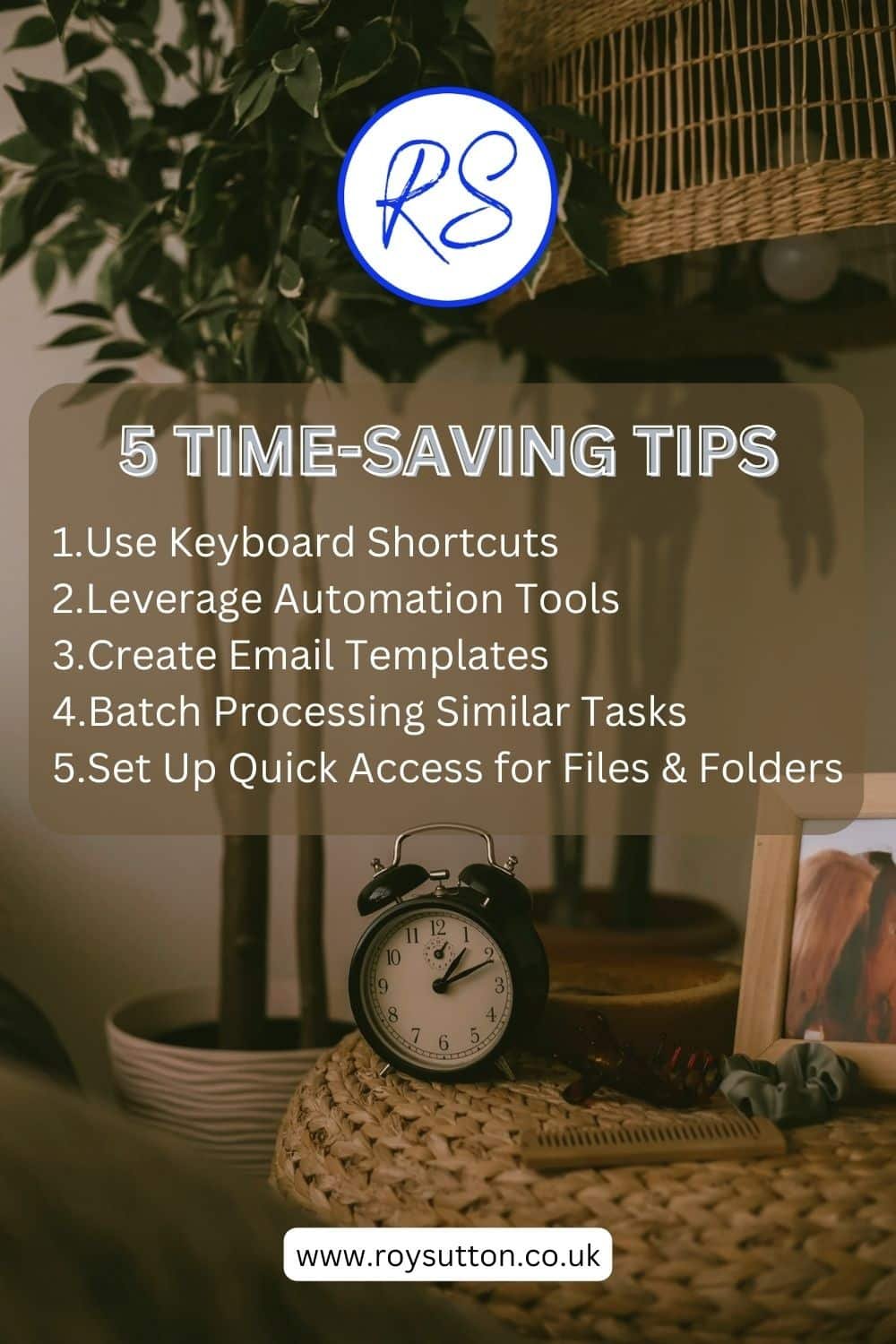
Bonus Timing Saving Tips:

Here are some useful time-saving tips that are often overlooked. Increasing your productivity will mean getting more done in less time. What’s not to like about that?

1. Use Keyboard Shortcuts: Learning and using keyboard shortcuts for your most-used software can significantly speed up your work. Whether it’s for operating systems, word processors, or specific applications, mastering these shortcuts reduces the time spent navigating menus and will increase your productivity.

2. Leverage Automation Tools: Utilize automation tools and apps like IFTTT (If This Then That) or Zapier to automate repetitive tasks. These tools can help with tasks like automatically saving email attachments to cloud storage, posting updates across social media platforms, or organizing files. Automation can save you countless hours in the long run.

3. Create Email Templates for Common Responses: If you find yourself frequently sending similar emails, create a set of templates for these common responses. This can save you a significant amount of time and ensure consistency in your communication. Most email clients have features that allow you to save and reuse templates with just a few clicks.

4. Batch Processing Similar Tasks: Instead of switching between different types of tasks throughout the day, try batching similar tasks together. For example, set specific times for answering emails, making phone calls, or doing administrative work. This reduces the mental load of constantly switching contexts and increases overall efficiency.

5. Set Up Quick Access for Frequently Used Files and Folders: Organize your digital workspace by creating shortcuts or bookmarks for frequently accessed files and folders. Whether it’s pinning important folders in your file explorer or bookmarking essential documents in your browser, having quick access can save you the hassle of searching through directories every time you need them.


Saily eSIM

Master your time management skills:

Whilst this is not a comprehensive list, it’s a good basis on which to start improving your time management skills.

If you want to be successful then effective time management is an essential skill.

Please share this post on social media:

If you found this post interesting and inspiring then please share it on social media with your friends and your personal network.

When you share, everyone wins.

Please share it now. If you can do that for me I’d be ever so grateful and you’ll be helping a keen blogger reach a wider audience.

Thank you.

How to stop worrying and start living

How to stop worrying and start living is a topic we would all do well to reflect on.

We all tend to worry a bit more than we should.

Worrying is natural, but it is rarely helpful. It just adds to our stress levels. And what’s the worst thing that can happen anyway?

And even if it did happen, would worrying have stopped it from happening?

Life’s too short to stress ourselves out with worry.

The question is, how do we stop ourselves from worrying? Well, consider this idea.

Dale Carnegie’s book How to Stop Worrying and Start Living is a very useful guide. This book is a great personal development text, and it’s well worth reading. I can strongly recommend it to you.

Make Money
How to stopworrying
Saily eSIM

How to stop worrying:

However, until you have the chance to read it, this animated video provides a useful summary of the key ideas in the book.

So I can recommend you watch this video now and then read the book whenever you get the chance.

Further reading:

Readers serious about their own personal development will be keen to establish their own small library of motivational resources, I’m sure.

Dale Carnegie’s book would be an essential addition to any personal development library.

So, take action now. Check out How to Stop Worrying and Start Living while it’s fresh in your mind.

Please share this post with your friends:

Did you find this article interesting and useful, dear reader?

If so, then please share it on social media with your friends. When you share, everyone wins.

So please share it now. If you do, I’ll be ever so grateful, and you’ll be helping a keen blogger reach a wider audience.

Thank you.

Articles you might find interesting:

How to find and do work you love, now and forever

How to find and do work you love? A great question for all you very intelligent readers to contemplate today.

Now, not everyone will find the answer, of course, but most people frequently ask this question in my experience.

Job satisfaction:

How many people would say they get job satisfaction from their work, in percentage terms?

Apparently, it’s only around 20%.

That would suggest that 80% of all people hate their jobs.

If true, I think that matters, and it’s especially relevant to society if you think about it. Why?

Quite simply, because it suggests that most people will not be quite as productive as they might otherwise be. Let’s face it, you can’t really be at your most productive if you’re not happy in your job.

A sense of purpose:

So dear reader, which side are you on?

Does the work you do place you in the 20% who enjoy job satisfaction, or are you one of the 80%?

Essentially, job satisfaction comes as a result of doing work that gives us a sense of purpose.

If we have a genuine sense of purpose, we’ll have a strong desire to do our work well. And we can only do it to the best of our ability if it really matters to us.

Doing our work well matters because that’s how we make a difference.

Hence, that’s how we make a contribution and leave a legacy behind us.

So in that sense, job satisfaction certainly matters.

Consider your work:

Does your work really matter to you?

And does it give you a sense of purpose? Perhaps it’s simply the means for paying your bills?

Do you get out of bed each morning looking forward to the day ahead?

No job is ever perfect, but given that work takes up a third of our lives, it’s essential we enjoy what we do and derive at least some job satisfaction from it.

Maybe there’ll be some elements of a given job we dislike, but mostly we should enjoy our work because that way we’re better placed to do it well.

In the inspirational TEDx Talk video embedded below, Scott Dinsmore explains how, during the early part of his career, he was encouraged to do any job just to build up his resumé.

However, he very quickly realized that this approach was unwise and resulted in no job satisfaction.

He makes his point with an excellent quote from Warren Buffett who said, “Taking any job just to build your resumé is like putting off s*x until your old age.”

Now, why would that make sense?

Experience is important, of course, but work should not just be about building your resumé.

Work should be about adding value and making a meaningful contribution to society.

It should be about using your skills and natural talent to make a difference to the lives of others.

So, if success is your aim, then the work you do must matter to you.

If you find work you enjoy, then job satisfaction will follow.

Put simply, if you like the work you do, you’ll do it well. And if you do it well, people will notice. And once people begin to notice you, then you’re on your way to achieving real success.

Make Money

Knowledge required:

The trick is to find work that you can’t not do.

Something you’d happily do for nothing if you couldn’t find someone to pay you to do it.

That’s the basis for real job satisfaction.

All of this is more easily said than done, of course.

Perhaps you’ve no idea about what matters to you in terms of work.

If you’re relatively young and new to the world of work, how could you possibly know? In that case, you need to start improving your basic knowledge and awareness.

1. Know yourself:

A good starting point for improving your knowledge is becoming a self-expert. Knowing just what you have in your arsenal.

  • What are your unique strengths?
  • What are your weaknesses?
  • What fills you with enthusiasm?
  • What fills you with dread?
  • What do you love to do?
  • What do you hate doing?

If I asked someone you knew well to tell me what you’re good at, what would they say?

  • For what activity do they regard you as the ‘go to’ person?
  • What do they regularly thank you for?
  • What would you do for fun if you couldn’t do it for a living?
  • On what activity can you lose yourself for hours at a time?

By answering these questions and others like them, you’ll get a better idea of what you’re looking for. And let’s face it, if you don’t know what you’re looking for, you’ll never find it.

2. Know your values:

What do you regard as your set of values? What moral framework matters to you when you’re making decisions?

What would you not do simply because you wouldn’t want to disappoint your family? What would make you feel proud if you were to tell your family that’s what you’re doing?

Anything you choose to do should be congruent with your own set of values.

3. Know your experiences:

The most powerful lessons in life come from the mistakes we make. The lessons we learn from our own mistakes and the things we’ve done are collectively known as experience. And experience is a valuable commodity.

Pay attention to your experience. Think about the things you’ve done right. Think about the things you’ve done wrong.

When have you felt completely in control of a situation, regardless of the challenges you face?

When have you felt completely out of your depth?

Think about the things you’ve enjoyed doing. Think about those activities you really hated.

4. Know what matters to you:

In crude but simple language, the underlying question here is, “What is it that you actually DO ‘give a sh*t’ about?

We tend to do stuff because other people suggest it’s what we should be doing. However, it really should be about what actually matters to us.

Identify what it is that makes you come alive and makes you feel energized.

John Lennon’s Aunt Mimi famously said, “Playing the guitar is all very well, John, but you’ll never make a living at it.

Fortunately, John didn’t listen to her, and his guitar helped him to make a very lucrative living because he really enjoyed writing songs and playing music.

In fact, his creative output continues to generate millions of dollars for his estate 45 years after his death.

John Lennon did well because he did something he enjoyed doing, and he didn’t allow himself to be influenced by those who thought he should pursue a different line of work.

Confidence compounds:

By working to your strengths, your confidence will grow.

Each success you have will improve your confidence. And as your confidence grows, one success will lead to another. It’s a virtuous circle.

Environment matters too:

Jim Rohn once said, “You’re the average of the five people you spend the most time with.

Personally, I think this is true.

The people around you really do matter.

They influence you, and their attitude rubs off on you.

Human beings are social animals, and we exist within groups. We also have to fit into the group otherwise we’re very quickly ostracized by other group members.

Hang around with people who inspire possibility. People who lift you up and not pull you down. Mix with people who will influence you in a positive way. Find role models from whom you can learn.

How to find and do work you love:

Scott Dinsmore’s mission is to change the world by helping people find what excites them and build a career around the work only they are capable of doing.

If you can find the work you are compelled to do, then you can add real value to your fellow human beings.

Discover what you’re really meant to do and you’ll be on to a winner.

You’ll also get maximum job satisfaction.

Therefore, in conclusion, if you’ve yet to find what you’re looking for, then keep looking until you do.

In the meantime, I recommend that you watch the video. It is thought-provoking and compelling, and it will be a good use of your time.

Please share this post with your friends:

Did you find this article and video interesting and useful, dear reader?

If so, then please share it on social media with your friends. When you share, everyone wins.

So please share it now. If you do, I’ll be forever grateful, and you’ll be helping a keen blogger reach a wider audience.

Thank you for your support.

Make Money

Articles you might find interesting:

Why you should put something away for a rainy day

Make Money

Dear Reader, have you ever considered why you should put something away for a rainy day?

When you’re doing well and have a good income, it’s easy to imagine that the good times will go on forever and you can enjoy it all with the expectation that money will continue to flow in your direction without interruption.

But life’s not like that. Into every life, some rain will fall, as the saying goes.

Good times don’t last forever. Life tends to be cyclical, like the changing of the seasons.

The time to repair your roof is when the sun is shining, for winter will have its day and we must be prepared for inclement weather.

Savings matter:

When you get paid each month you must set some money aside, separated into three accounts, as follows:

You must be prepared to pay those bills that come in regularly; you must be ready for an emergency. Equally, you must start creating wealth, so that one day you’ll be able to retire.

Bill Payment:

You cannot live in the modern age without incurring bills.

Whether it’s utility bills, phone bills, TV subscriptions, mortgage payments or rent, credit card payments, food bills, repayments on a car loan, et cetera. You must set money aside to pay all those bills when they fall due.

Emergency Account:

As the saying goes, stuff happens.

And when stuff happens you must be prepared to deal with it. You must have an emergency fund you can tap into to deal with emergency repairs or even an unexpected interruption to your income. These things do happen.

Financial Freedom:

When you’re young, it’s easy to think that you’ll keep on working, if you must, to earn an income.

However, trust me, one day you will want to retire from work, or at least from the daily grind.

If you are to retire you will need some wealth.

The best time to start building wealth is when you’re young.

Start a 401K or pension whilst you’re young, pay into it regularly and with some luck and good financial management, you can enjoy a comfortable old age.

By starting young you will benefit from the magic of compounding. The impact of compound interest should not be underestimated.

Remember; it will rain:

Think of life in terms of the seasons and prepare accordingly.

Most people experience hard times at some point in their lives, particularly when they’re young.

You can be sure it will rain; the only question is when.

You will be able to weather the storm a lot better if you have a financial cushion in the form of some savings.

If you are lucky enough to have an income now, you’d do well to remember to put some of your income away for a rainy day.

It’s easy to squander your money thinking the good times will never end.

However, nothing lasts forever. So, my advice is, to be prepared.

Why you should put something away for a rainy day
Make Money

Please share this post:

If you found this article useful then please share this post on social media with your friends.

When you share, everyone wins.

So please share this post now. If can you do that for me then I’ll be ever so grateful and you’ll be helping a keen blogger reach a wider audience.

Thank you.

Change habits and you can change your life

To change habits requires discipline and recognition that change is essential if life is to improve.

So, is your life going in the direction you’d like it to go, dear reader? Perhaps, it’s not.

Somehow, you can’t quite achieve the results you’d like to achieve. Would that be true?

In the video included here, Bob Proctor explains that the reason you’re stuck and can’t get the results you want is likely to be because of a paradigm.

And what’s a paradigm?

Well, Bob goes on to explain what paradigms are and how they are formed.

He also explains how change can be achieved.

If change is something you’d like to achieve, then this is a really interesting presentation; it is fairly short but worth watching.

I recommend it to you, so take a few minutes and check it out now.

Quotes about change
Make Money

Change habits:

Please share this post with your friends:

If you found this article useful, then please share it on social media with your friends. When you share, everyone wins.

So go on, please share it now. If you can do that for me, I will be forever grateful, and you’ll be helping a keen blogger reach a wider audience.

Thank you, dear reader.

Make Money

Articles you might find interesting:

33 funny clever quotes that’ll amuse you

Are you looking for some funny clever quotes, dear reader? Well, I’ve curated 33 little gems that will amuse you. Certainly, they made me smile.

If you like good quotes, you’ll love some of these on offer today.

These are some of my favourite quotes of all time.

So, take a few moments to read them all, and please feel free to pass them on to your friends.

Enjoy!

Make Money

Funny clever quotes (1-20):

  1. I saw a stationery store move. ~Jay London
  2. I never said most of the things I said. ~Yogi Berra
  3. Guilt: the gift that keeps on giving. ~Erma Bombeck
  4. What’s another word for Thesaurus? ~Steve Wright
  5. Life is hard. After all, it kills you. ~Katharine Hepburn
  6. I can resist everything except temptation. ~Oscar Wilde
  7. It’s simple if it jiggles, it’s fat. ~Arnold Schwarzenegger
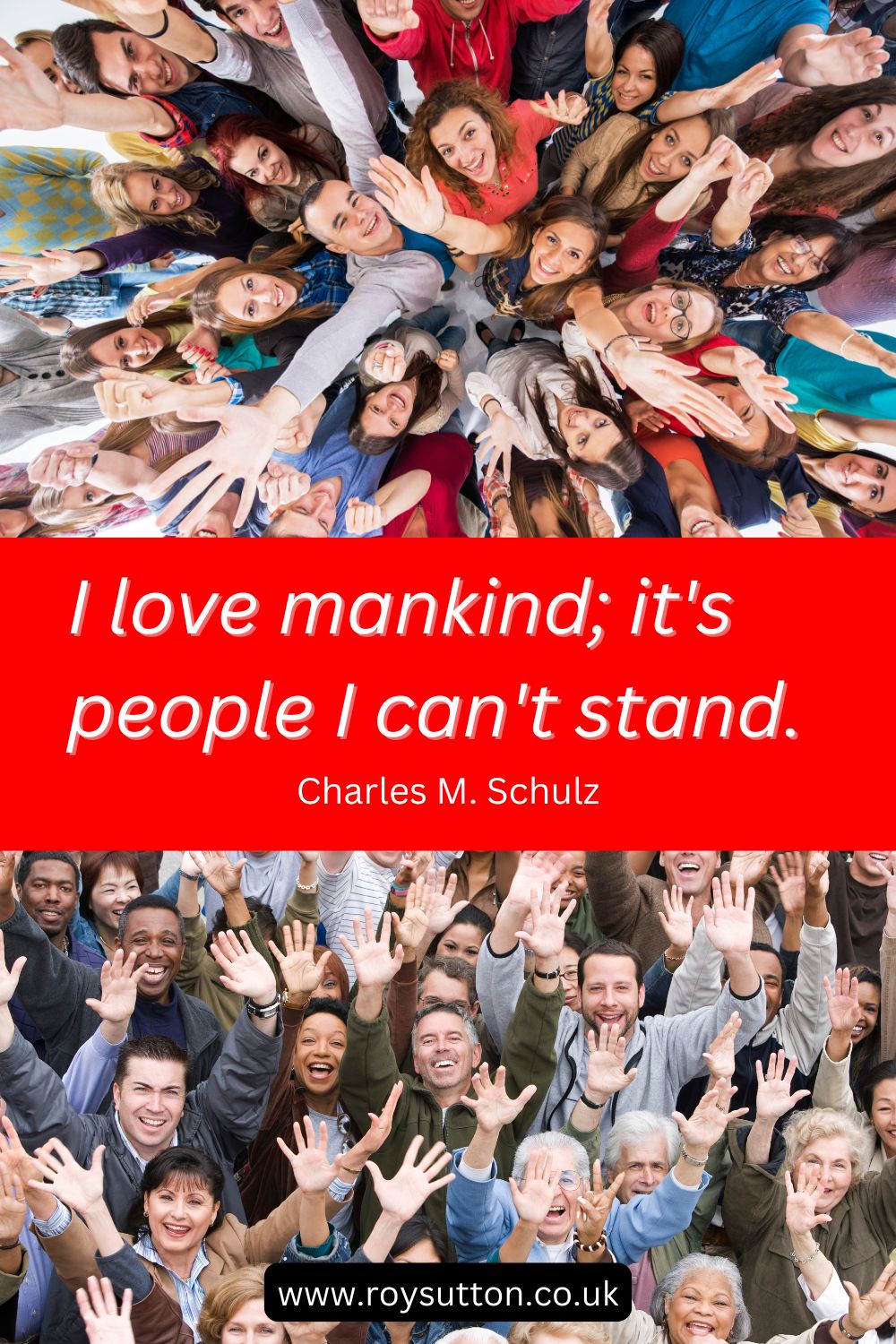
  8. I love mankind; it’s people I can’t stand. ~Charles M. Schulz
  9. Only the mediocre are always at their best. ~Jean Giraudoux
  10. My one regret in life is that I am not someone else. ~Woody Allen
  11. Progress is man’s ability to complicate simplicity. ~Thor Heyerdahl
  12. Procrastination is the art of keeping up with yesterday. ~Don Marquis
  13. Between two evils, I always pick the one I never tried before. ~Mae West
  14. I refuse to join any club that would have me as a member. ~Groucho Marx
  15. Get your facts first, then you can distort them as you please. ~Mark Twain
  16. Two wrongs don’t make a right, but they make a good excuse. ~Thomas Szasz
  17. Yield to temptation. It may not pass your way again. ~Robert A. Heinlein
  18. Everything I like is either illegal, immoral or fattening. ~Alexander Woollcott
  19. Age is something that doesn’t matter unless you are a cheese. ~Luis Bunuel
  20. My fake plants died because I did not pretend to water them. ~Mitch Hedberg

Funny clever quotes (21-33):

  1. Do not take life too seriously. You’ll never get out of it alive. ~Elbert Hubbard
  2. I would never die for my beliefs because I might be wrong. ~Bertrand Russell
  3. There cannot be a crisis next week. My schedule is already full. ~Henry Kissinger
  4. I like long walks, especially when they are taken by people who annoy me. ~Fred Allen
  5. Laziness is nothing more than the habit of resting before you get tired. ~Jules Renard
  6. Happiness is having a large, loving, caring, close-knit family in another city. ~George Burns
  7. I haven’t spoken to my wife in years. I didn’t want to interrupt her. ~Rodney Dangerfield
  8. People who think they know everything are a great annoyance to those of us who do. ~Isaac Asimov
  9. I always wanted to be somebody, but now I realize I should have been more specific. ~Lily Tomlin
  10. We are all here on earth to help others; what on earth the others are here for I don’t know. ~W. H. Auden
  11. A government that robs Peter to pay Paul can always depend on the support of Paul. ~George Bernard Shaw
  12. My definition of an intellectual is someone who can listen to the William Tell Overture without thinking of the Lone Ranger. ~Billy Connolly
  13. A successful man is one who makes more money than his wife can spend. A successful woman is one who can find such a man. ~Lana Turner
Make Money

Enjoyed these quotes? Please share this post:

So dear reader, was this post worth a few minutes of your time?

If any of these funny clever quotes amused you, then please share this post with your friends on social media.

When you share, everyone wins.

So go on, please share this post now, and I’ll be ever so grateful. You’ll be helping a keen blogger reach a wider audience.

Thank you.

Articles that might appeal to you:

27 quotes to inspire you to greatness and beyond

To achieve greatness, we all need a little inspiration we can refer to frequently. So here are 27 quotes to inspire you to greatness.

Feel free to bookmark this page and refer to them as often as necessary.

Make Money

Make Money

Enjoyed these quotes? Please share this post:

So dear reader, was this post worth a few minutes of your time?

If any of these quotes inspired you then please share this post with your friends on social media.

When you share, everyone wins.

So go on, please share this post now and I’ll be ever so grateful. You’ll be helping a keen blogger reach a wider audience.

Thank you.

Articles that might appeal to you:

© Mann Island Media Limited 2025. All rights reserved.

7 tips for becoming your best self

If you need tips for becoming your best self, then this article is for you, dear reader.

Successful people are generally regarded as being the best at whatever they do.

However, to be the best at what you do, you must first become the best person you can be. That is, you must be your best self.

In other words, you must find the hero that lies within you.

There’s infinite capacity within you to excel, but to realize at least some of your potential, you must work at becoming the exceptional person you really can be.

The obvious question is, where do you start?

Well, here are 7 tips to help you become your best self:

Becoming your best self:

1. Have a sense of purpose:

If you’re going to be the best person you can be, then you cannot just drift through life, hoping that it will fall into place. It won’t. Nothing happens by accident.

You cannot drift through life with little direction or purpose, not if success is your aim.

Drifting may seem attractive to some, but it’s not the way to discover contentment, health, and wealth.

It never has been, and it never will be.

You must determine your life’s purpose, or your mission if you like.

Having a sense of purpose is essential. With it, you’ll have your own compass that will guide you to your true north all the time.

2. Live by a moral code:

What matters to you, dear reader?

Having a set of values is essential. Having a moral code is important too.

Accepted values and a moral code underpin civilisation.

Values are the benchmark against which we measure ourselves and any successes we may achieve.

For instance, achieving success by cheating will not make you feel good about yourself because you’ll know you didn’t play fair. If you were dishonest, you’ll know you were dishonest.

It can only feel like a real achievement if it is won in a fair fight. A bit of gamesmanship is one thing but cheating is quite another.

So what is it you value most, dear reader?

Take a minute to consider that question.

Make a list of your top three values.

Then check your goals against those values. Are your goals congruent with your values? Certainly, they’ll need to be.

If a goal doesn’t align with any of your top three values, then you must get rid of it.

Anything you achieve that is inconsistent with your values will not make you feel good about yourself.

You will only recognize yourself as your best self when you consider yourself against the values that matter most to you.

Make Money

3. Know your needs:

Every human being has needs. Having needs is part of the human condition.

Abraham Maslow put it best when he described the hierarchy of needs.

Physiological needs, the need for safety and security, the need for love and belonging, the need for self-esteem, and the need for self-actualization.

We all need these things to some degree, at least.

We all need certainty. However, certainty can be boring, so we also need a little uncertainty or change to make life more interesting. The problem is uncertainty can make us feel insecure, which is why we tend to feel uncomfortable when we experience change.

You’ll have your own specific needs, dear reader, and it’s important to identify them.

If you’re to live authentically, then the life you live should be consistent with your needs. You can only be you. Anything else would be a fake.

Perhaps attention and recognition are your greatest needs?

Then again, perhaps what truly matters most to you is family and friends.

Perhaps you need to become a mom or a dad?

Alternatively, perhaps you have a burning need to play a musical instrument or to write.

Whatever your needs, if they remain unmet, it will stop you from living authentically.

So list your top five needs and make sure any goals you have are consistent with meeting them.

Know your needs and make sure you work towards meeting them before it is too late.

4. Know your passions:

Passion is important.

If you have a passion for what you do, you’ll be keen to do it well.

If it matters to you, of course, you’ll do it well. Why wouldn’t you? And if you do it well, people will notice. And when people start to notice, then the demand for your services will increase. And once the demand for your services increases, then your value will increase.

So it’s a virtuous circle.

Knowing what you truly like and enjoy doing is part of really knowing who you are as a person.

Knowing your passions allows you to express yourself and make your own unique contribution to life.

And by expressing yourself and leaving a legacy, you’ll pay tribute to all those people who inspired you to become the person you could be. To become your best self.

5. Live from the inside out:

Your body is the temple in which you will live your entire life.

If that temple is in bad shape, then that’s hardly a basis for you becoming your best self.

So be in tune with your body and take care of it.

Eat sensibly and exercise regularly.

Put your physical and mental well-being at the heart of everything you do.

Appreciate the world around you. Stop to smell the roses occasionally. Allow yourself to be in spiritual contact with nature and the world around you.

When you feel stressed and pressured, take the time to breathe deeply. This will help you relax and quiet your distracted mind.

Above all, listen to what your heart is saying. Follow your heart, but take your brain with you, of course.

6. Work to your strengths:

We all have our strengths. We all have a natural talent for something, and there are things that others will recognise that we’re very good at.

You’re no different, dear reader. So what are your strengths?

In what do you excel in comparison to other people? For what are you recognised as the ‘go-to’ person by your colleagues?

Knowing your strengths and making sure you’re working to your strengths is essential if you’re to be your best self. Certainly, you won’t get very far if you’re working to your weaknesses.

So what positive traits do you possess?

What would other people say are your strengths? Ask your family and friends if you’re unsure.

Your authentic self will be expressed best by working to your strengths, naturally.

If you’re good at what you do, then, once again, you’ll do it well. And doing it well will also increase your self-confidence.

And confidence is an essential ingredient for you to be your best self.

7. Add value to others:

Human beings are social animals, and we live naturally in groups and societies.

Being part of society means contributing to it.

We must all contribute, particularly if we’re striving to be our best selves.

Living authentic lives means we must develop an interconnected sense of being.

If you’re true to who you are, living your life’s purpose, and giving your talents to the world around you, then you are providing a service to others.

To contribute to society, you must serve others in some way. Add value to their lives. And giving your best in whatever you do is the way to add value. That is your spirit, your very essence. That is your raison d’etre.

Adding value and providing service to others provides its rewards.

Sharing your gifts with the world can indeed be a pleasure. Knowing that your contribution was one that only you could make can be truly satisfying.

Know you’ve made a real difference, and then you’ll have achieved your best self.

Conclusion:

We can all aspire to be more than we are, but nothing happens by accident.

If you want to be the best, then know where you’re going, understand why you’re going there, and recognise how it aligns with your passions, moral code, needs, strengths, and desire to add value in the most effective way possible.

It can be done, and people do. So can you! Good luck.

Please share this post with your friends:

If you found this blog post interesting and useful, then please share it on social media with your friends. When you share, everyone wins.

Please share it now, and I’ll be ever so grateful. You’ll be helping a keen blogger reach a wider audience.

Thank you for being so supportive.

Make Money


How to spot a liar and be your own lie detector

Today, I want to talk about how to spot a liar.

Introduction:

Liar, Liar pants on fire” as the old saying goes but how to spot a liar in any situation? If only it were so easy to spot a liar, simply by looking at whether his or her pants were on fire.

Unfortunately, that’s not the way life works.

And handy as it might be to carry around a lie detector at all times, that wouldn’t be very practical either, would it? Well, not a lie detector of the physical variety anyway.

So what’s the next best thing?

The next best thing would be if we could become our own lie detector, surely?

However, would that be possible?

The answer is yes. With a little effort, it’s possible to develop the skills to spot a liar. You just need to think about the signs.

Make Money

Become a lie detector:

Now, this is important because we live in a world where we’re constantly bombarded with fake news, weasel words, half-truths, untruths and outright lies.

Politicians are the worst culprits but just about everyone in life tells the occasional lie when they feel it’s necessary.

That’s human nature, of course. This means we must learn the skills that will allow us to judge whether what we are being told is the truth or a lie at any given time.

How to spot a liar:

So how do you spot a liar?

Essentially it’s all about looking for clues.

Those little signs will reveal whether what we’re being told is likely to be true or not. A lie detector looks for clues and we can too.

In the TED Talk video embedded here, Pamela Meyer offers her observations on the signs or clues to watch out for to see if someone is lying to you.

I must say that I found this video both useful and interesting and it’s worth a few moments of your time.

The ability to spot lies is a powerful skill which everyone can develop.

You can become your own lie detector and it’s worth the effort.

If you can only work on developing one skill then lie spotting would be a good one I think.

Make Money

Please share this post with your friends:

Did you find this article interesting and useful dear reader?

If so, then please share it on social media with your friends. When you share, everyone wins.

So please share it now. If you do I’ll be ever so grateful and you’ll be helping a keen blogger reach a wider audience.

Thank you.

How to build confidence and self-esteem

How to build confidence and self-esteem? Interesting question.

Building confidence and self-esteem is a journey that can transform your life. It’s about recognizing your worth and believing in your abilities.

One way to start is by changing negative self-talk. When you catch yourself thinking negatively, try to replace those thoughts with more positive ones. This can help shift your mindset over time.

Taking care of your body can also boost confidence. Eating healthy foods and exercising regularly can make you feel stronger and more energized. This physical boost often leads to feeling better about yourself overall.

Key Takeaways

  • Self-confidence grows through daily positive actions and self-talk
  • Physical self-care supports mental well-being and self-esteem
  • Building a supportive environment helps maintain confidence long-term
Make Money

Understanding Self-Esteem and Confidence


Self-esteem and confidence shape how we view ourselves and interact with the world. These qualities affect our thoughts, behaviors, and overall well-being. They can be improved through practice and self-awareness.

The Psychology of Self-Esteem

Self-esteem refers to a person’s overall sense of self-worth and value. It develops from early childhood experiences and continues to evolve throughout life. People with high self-esteem tend to have a positive self-image and feel worthy of respect and happiness.

Those with low self-esteem may struggle with negative self-talk and doubt their abilities. They often compare themselves unfavorably to others and have trouble accepting compliments.

Self-esteem impacts many areas of life, including:

  • Relationships
  • Career choices
  • Decision-making skills
  • Ability to handle stress

Improving self-esteem involves challenging negative thoughts and practising self-compassion. This process takes time but can lead to significant positive changes.

The Interplay Between Self-Esteem and Confidence

While related, self-esteem and confidence are distinct concepts. Confidence refers to trust in one’s abilities in specific situations. It can vary depending on the task or circumstance.

A person may have high self-esteem but low self-confidence in certain areas. For example, someone might feel good about themselves overall but lack confidence in public speaking.

Building confidence often involves:

  1. Setting small, achievable goals
  2. Practicing new skills regularly
  3. Celebrating successes, no matter how small

As confidence grows, it can positively impact self-esteem. Likewise, higher self-esteem can make it easier to develop confidence in new areas. This creates a positive feedback loop that enhances both qualities over time.

Cultivating a Positive Mindset


A positive mindset helps build confidence and self-esteem. It involves changing how we think about ourselves and the world around us. This change can lead to better mental health and more success in life.

Challenging Negative Self-Talk

Negative self-talk can hurt a person’s confidence. It’s that voice in their head that says mean things. People can learn to spot this talk and fight back.

One way is to write down negative thoughts. Then, look for proof that they’re wrong. Often, there isn’t any. Another trick is to ask, “Would I say this to a friend?” If not, it’s too harsh.

People can also try to change negative thoughts to neutral ones. Instead of “I’m so dumb,” they might think, “I’m still learning.” This is more fair and kind.

Embracing Positive Affirmations

Positive affirmations are good things people say to themselves. They can boost mood and confidence. To use them, pick a few short, true statements.

Examples might be:

  • I am capable and strong.”
  • I learn from my mistakes.”
  • I am worthy of love and respect.

It helps to say these out loud each day. Writing them down works too. The key is to pick ones that feel true. Over time, the brain starts to believe them more.

Fostering Gratitude

Gratitude means feeling thankful for good things in life. It can make people happier and more confident. There are easy ways to practice it every day.

One idea is to keep a gratitude journal. Each night, write down three good things that happened. They can be big or small. Another way is to tell others “thank you” more often.

People can also try a gratitude walk. During the walk, they notice things to be thankful for. It might be nice weather or a pretty flower. This helps train the brain to see the good in life.

Practical Steps to Build Confidence


Building confidence takes effort and practice. These steps can help boost self-esteem and develop a more positive self-image.

Setting and Achieving Realistic Goals

Start by setting small, achievable goals. This helps create a sense of accomplishment and builds momentum. Break larger goals into smaller tasks to make them less overwhelming.

Make small promises to yourself and follow through. This builds self-trust and confidence in your abilities.

Track progress and celebrate small wins. This reinforces positive behavior and motivates further action.

Gradually increase the difficulty of goals as confidence grows. This allows for continuous growth and development.

Developing Assertiveness and Healthy Boundaries

Practice speaking up for oneself in a calm, clear manner. This helps build assertiveness skills.

Learn to say “no” to requests that don’t align with personal values or goals. This establishes healthy boundaries.

Express thoughts and feelings openly and honestly. This improves communication and self-assurance.

Stand up for personal rights and needs while respecting others. This balance is key to healthy assertiveness.

Cultivating Strengths and Acknowledging Success

Identify personal strengths and talents. Focus on developing these areas to boost confidence.

Take on new challenges that align with strengths. This provides opportunities for growth and success.

Keep a record of accomplishments, big and small. Review this list regularly to remind oneself of past successes.

Practice self-compassion and positive self-talk. This helps reframe negative thoughts and builds a more positive self-image.

Accept errors gracefully and learn from mistakes. This fosters resilience and continued personal growth.

Overcoming Challenges to Self-Esteem


Building self-esteem takes effort and persistence. It’s normal to face setbacks. The key is learning how to handle common roadblocks in healthy ways.

Dealing With Failure and Mistakes

Failure and mistakes can hurt self-esteem. But they’re normal parts of life. The trick is changing how you think about them.

Try to see mistakes as chances to learn. Ask: “What can I do better next time?” This helps you grow.

Be kind to yourself when you mess up. Talk to yourself like you would a good friend. Say things like “It’s okay, everyone makes mistakes.”

Make a list of times you bounced back from failure. Look at it when you’re feeling down. It can remind you that you’re strong.

Managing Anxiety and Depression

Anxiety and depression often go hand-in-hand with low self-esteem. They can make you doubt yourself. But there are ways to cope.

Try relaxation techniques like deep breathing or muscle relaxation. These can calm your mind and body.

Challenge negative thoughts. When you think, “I’m not good enough,” ask, “Is that really true?” Look for proof that you are capable.

Exercise can boost mood and confidence. Even a short walk can help. Eating well and getting enough sleep matter too.

If anxiety or depression feel too big to handle alone, talk to a doctor or therapist. They can offer more support.

Stopping the Comparison Trap

Comparing yourself to others can really hurt self-esteem. But it’s a hard habit to break. Here are some tips:

Focus on your own progress. Keep a journal of your achievements, big and small.

Remember that social media often shows only the best parts of people’s lives. It’s not the full picture.

Make a list of your unique strengths and talents. Everyone has different gifts. Yours are just as valuable as anyone else’s.

Practice gratitude. Write down three things you’re thankful for each day. This helps you see the good in your own life.

When you catch yourself comparing, try to shift your focus. Do something you enjoy or help someone else instead.

Self-Care for Self-Esteem


Taking care of yourself is key to building confidence and self-esteem. Self-care practices can boost your mood, reduce stress, and help you feel more positive about yourself.

Incorporating Exercise and Physical Activity

Regular exercise is great for self-esteem. It releases endorphins that make you feel good. Even short walks can help. Try to exercise 30 minutes a day most days of the week.

Some good options include:

  • Jogging
  • Swimming
  • Yoga
  • Dancing

Exercise helps people feel stronger and more capable. It can improve body image too. Setting and reaching fitness goals builds confidence that carries over to other areas of life.

Embracing Self-Acceptance Through Self-Care

Self-care rituals promote self-acceptance. Taking time for yourself shows you value your own wellbeing. Simple acts like getting enough sleep or eating healthy foods count as self-care.

Other ideas:

  • Take relaxing baths
  • Read enjoyable books
  • Spend time in nature

Treating yourself with kindness is key. Avoid negative self-talk that hurts self-esteem. Replace harsh self-criticism with gentler, more accepting thoughts.

The Role of Meditation and Mindfulness

Meditation and mindfulness can calm anxious thoughts that harm self-esteem. These practices help people tune into the present moment instead of worrying. Even a few minutes of meditation each day can make a difference.

Guided meditations are great for beginners. They lead you through the process step-by-step. Many free guided meditations are available online or through apps.

Mindfulness also helps people notice and refute negative self-talk. By observing thoughts without judgment, it’s easier to let go of self-criticism.

Nurturing a Supportive Environment


Creating a positive environment and seeking help when needed are key to building confidence. These steps can make a big difference in how you feel about yourself.

Surrounding Yourself With Positive People

Positive people can lift your spirits and boost your self-esteem. Choose friends who support and encourage you. Spend time with those who make you feel good about yourself.

Cut back on time with negative people. Their attitudes can bring you down. Instead, seek out upbeat, caring friends and family members.

Join clubs or groups with shared interests. This can help you meet like-minded folks. Look for activities that make you feel good and confident.

At work, try to connect with positive coworkers. Their outlook can rub off on you. Avoid office gossip and drama when you can.

Seeking Professional Help When Needed

Sometimes, we need extra support to build confidence. It’s okay to ask for help. A therapist or counselor can offer tools to improve self-esteem.

They can teach ways to change negative thinking. This helps you see yourself in a better light. Cognitive-behavioral therapy (CBT) is often used for this.

Support groups can also be helpful. You’ll meet others facing similar issues. Sharing experiences can make you feel less alone.

If you’re not sure where to start, talk to your doctor. They can refer you to mental health services. Many workplaces also offer counseling programs.

Tools for Ongoing Confidence Building


Building confidence is a journey that requires consistent effort and the right tools. These methods can help you develop a stronger sense of self-worth over time.

The Power of Journaling

Journaling is a powerful tool for boosting self-esteem. It allows you to track your thoughts, feelings, and progress. Write down your daily accomplishments, no matter how small.

This practice helps reinforce positive self-belief. Try gratitude journaling to focus on the good things in your life. It can shift your perspective and improve your mood.

Use prompts to explore your emotions and experiences. For example: “What made me proud today?” or “How did I handle a difficult situation?”

Regular journaling can reveal patterns in your thinking and behavior. This awareness is key to personal growth and building lasting confidence.

Understanding the Root Cause of Low Self-Esteem

Identifying the source of low self-esteem is crucial for overcoming it. Common causes include:

  • Childhood experiences
  • Negative self-talk
  • Comparison to others
  • Past failures or rejections

Reflect on your past and present to pinpoint these factors. Ask yourself when you first started doubting your abilities.

Consider seeking help from a therapist or counselor. They can provide tools to work through deep-seated issues.

Challenge negative thoughts when they arise. Replace them with more balanced, realistic views of yourself.

Remember that your worth is not determined by others’ opinions or past events. Focus on your strengths and unique qualities.

Continuous Learning and Personal Development

Engaging in ongoing learning helps build confidence and self-esteem. Set goals for personal growth and pursue new skills or knowledge.

Take online courses, attend workshops, or read books on topics that interest you. Each new skill you acquire boosts your self-belief.

Try activities outside your comfort zone. This expands your abilities and shows you’re capable of more than you thought.

Celebrate your progress along the way. Acknowledge how far you’ve come and the effort you’ve put in.

Surround yourself with supportive people who encourage your growth. Their positivity can reinforce your own self-confidence.

Remember that personal development is a lifelong process. Be patient with yourself as you learn and grow.

Make Money

Frequently Asked Questions

Building self-esteem and confidence involves various strategies and practices. These include positive self-talk, setting achievable goals, and recognizing personal strengths. Regular exercise and self-care also play important roles in boosting self-worth.

What are effective strategies to enhance self-esteem in adults?

Adults can boost their self-esteem by practicing positive self-talk. This involves challenging negative thoughts and replacing them with more balanced, realistic ones.

Setting and achieving small goals helps build a sense of accomplishment. Adults should celebrate their successes, no matter how small.

Engaging in activities that showcase personal strengths can increase feelings of competence and worth.

What can women do to improve their self-wares of approaches to build self-esteem in teenagers?

Teenage girls can improve their self-esteem by focusing on their unique qualities and talents. Encouraging them to pursue hobbies and interests they enjoy can boost confidence.

Teaching assertiveness skills helps teenagers stand up for themselves and their beliefs. This can lead to increased self-respect.

Promoting a healthy body image is crucial. Emphasizing health and strength over appearance can help build a positive self-image.

List some daily practices that can help boost confidence.

Regular exercise is a powerful confidence booster. It releases endorphins and improves overall mood and energy levels.

Practising gratitude by listing three things to be thankful for each day can shift focus to positive aspects of life.

Dressing in clothes that make one feel good can improve self-image and boost confidence throughout the day.

How can individuals overcome feelings of low self-esteem?

Identifying and challenging negative self-talk is crucial. Cognitive behavioral therapy techniques can help reframe harmful thoughts.

Seeking support from friends, family, or a therapist can provide new perspectives and coping strategies.

Setting realistic goals and working towards them can build a sense of accomplishment and self-worth.

What is the role of personal achievements in fostering self-confidence?

Personal achievements, big or small, serve as concrete evidence of one’s capabilities. They provide a foundation for self-belief.

Reflecting on past successes can boost confidence when facing new challenges. It reminds individuals of their ability to overcome obstacles.

Setting and achieving goals creates a positive feedback loop. Each accomplishment builds confidence for future endeavors.

Please share this post with your friends:

Did you find this article and the videos interesting and useful?

If so, then please share it on social media with your friends. When you share, everyone wins.

So please share it now. If you do, I will be forever grateful.

Thank you. Your support is appreciated, dear reader.

Make Money

Articles you might find interesting: