
As a child, did you ever visit Santa’s Grotto, and did it seem magical to you?
As we enter the Christmas season, stores in London and every Western city are gearing up for a seasonal boost to their trade. One traditional way that big stores manage to pull in customers at this time of year is by setting up a Santa’s Grotto.
This way, children can meet with Santa and let him know what they desire as Christmas presents.
This is a magical time of year for young children, and they all love meeting Santa.
However, not every story can have the real Santa, of course. So, stores must rely on elderly men willing to play the part.
I thought it would be interesting to take a whimsical look at how the experience might be for those elderly gentlemen.
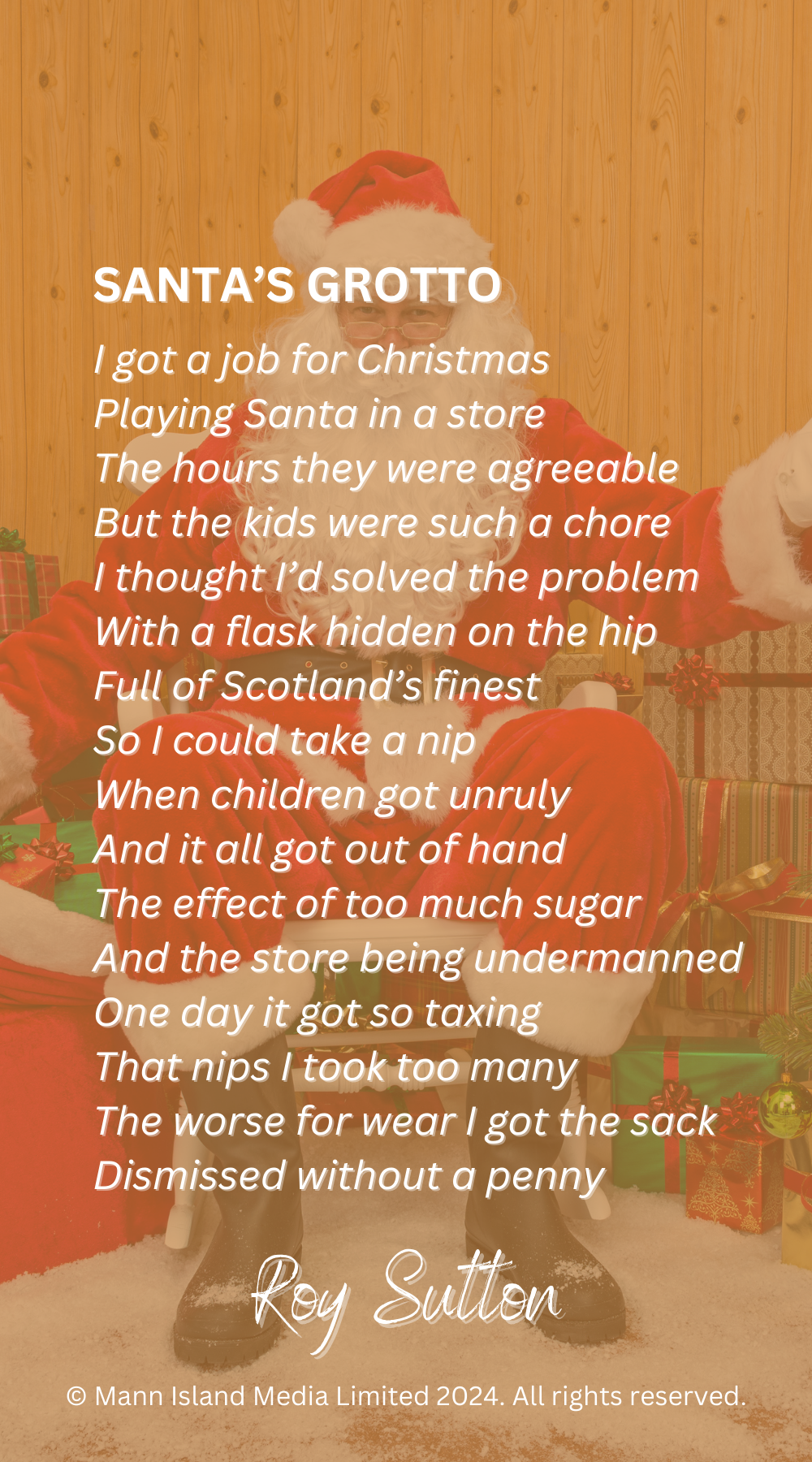
My thoughts are summarised in today’s poem.
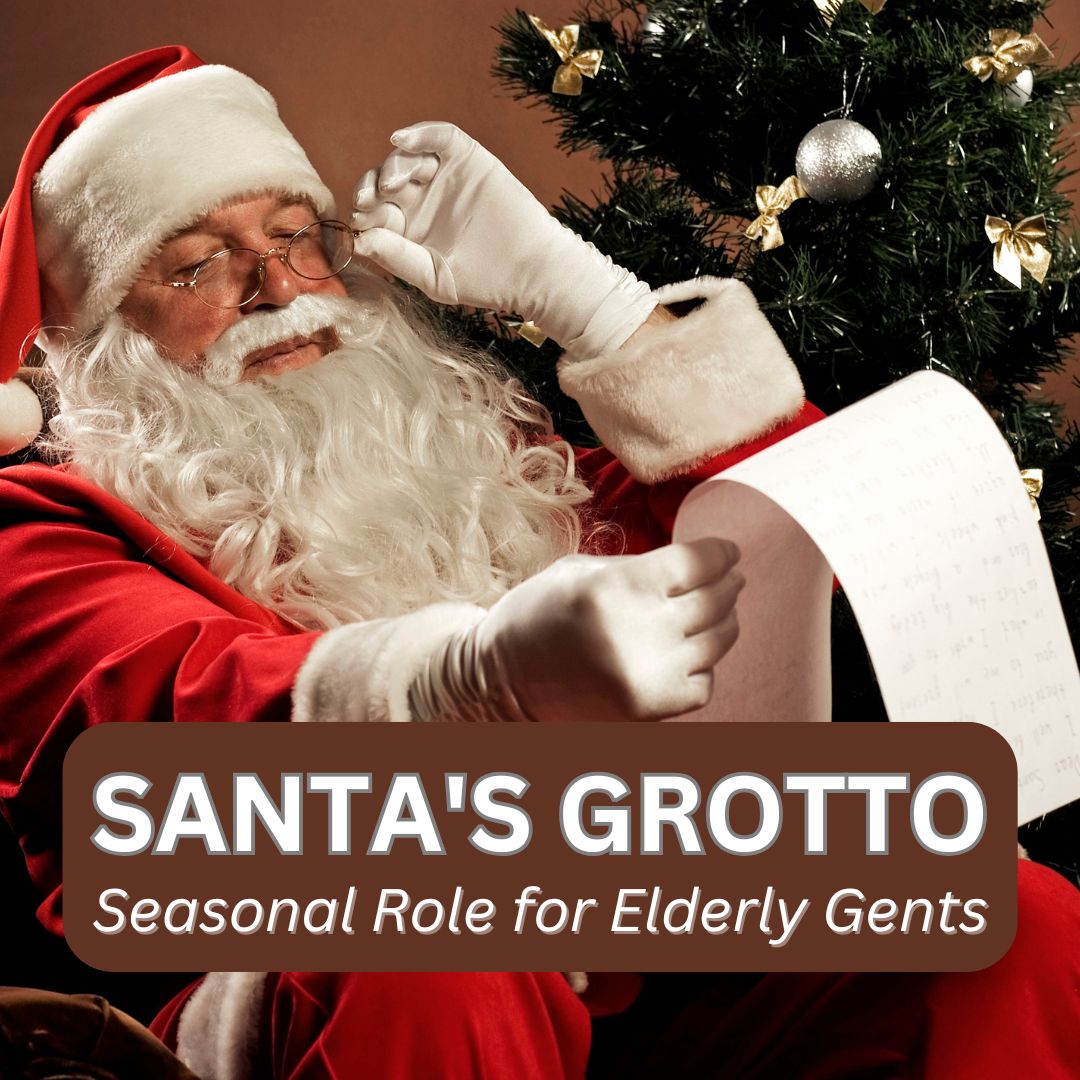


Santa’s Grotto
The Tradition of Santa’s Grotto:
Santa’s grotto is a fairly modern tradition, and its roots are more commercial and theatrical than ancient folklore.
Where it comes from
- Late 19th–early 20th century department stores
The modern Santa’s grotto originated in European and American department stores, especially in the UK and the US. Retailers began creating magical winter scenes where children could meet Santa as a way to attract families during the Christmas shopping season. - Early examples
- In the 1890s, stores like Brockton Department Store in Massachusetts featured live Santas.
- In the UK, stores such as Harrods popularised elaborate Christmas displays and grotto-like settings in the early 20th century.
- Why it’s called a “grotto”
The word grotto suggests a cave or hidden, magical place, drawing on imagery from fairy tales and folklore rather than Christian tradition. It helped create the idea that Santa lived somewhere mysterious and enchanting—often imagined as a snowy, woodland hideaway.
Connection to older traditions
- Santa himself is loosely based on St Nicholas, a 4th-century Christian bishop known for generosity—but St Nicholas never had a grotto.
- The grotto idea blends Victorian romanticism, fairy-tale aesthetics, and emerging ideas of childhood wonder rather than religious practice.
How it spread
- By the mid-20th century, Santa’s grotto became a standard feature in shopping centres, schools, and community events.
- It evolved into a family ritual, less about shopping and more about experience, nostalgia, and creating memories.
In short:
Santa’s grotto is a 20th-century invention, born from department store marketing, inspired by fairy-tale imagery, and designed to create a sense of magic for children—rather than a tradition with ancient or religious origins.
Best wishes for Christmas:
As this year comes to a close, I wish a joyful Christmas to those who celebrate, and for everyone else, a peaceful, positive, and successful year ahead. May 2026 be kind to us all.

Please share this post with your friends:
If you did enjoy this poem, please share it with your friends on social media.
Remember, when you share, everyone wins.
So go on, please share this post now.
If you can do that for me, I’ll be ever so grateful, and you’ll be helping a keen blogger reach a wider audience.
Thank you.


Other articles that might appeal to you:
- Remember the golden age of flying?
- Roy Sutton: In My Own Write
- Political Poem: The Guy in Number 10
- Poem about lifestyle choices
- Neanderthal Man: A poem about a modern phenomenon
- Patriotism poem to get you thinking
- Poem about mistakes and why they’re important
- Poem to Celebrate the Working Class
- Poem about the need to be businesslike
- 2 original poems about success to inspire you
- Poem about the dangers of Internet dating
- 2 poems about the afterlife to make you think
- Original Love Poem
- Does voting make a difference?
- 2 more original poems to get you thinking
- 2 original poems crafted with wisdom
- 3 philosophical poems to get you thinking
- 2 poems for the homeless and less fortunate
- Poem for the bereaved and remembering loved ones lost
- Poetry About Life: 4 poems reflecting life experiences
- 21 sarcasm quotes that are the sharpest form of wit
© Mann Island Media Limited 2025. All rights reserved.
Santa’s Grotto, Santa’s Grotto, Santa’s Grotto, Santa’s Grotto, Santa’s Grotto
Santa’s Grotto, Santa’s Grotto, Santa’s Grotto
